5 Signs Your Bra Is Too Tight, and What to Try
Five pressure clues in the band, cups, wires and straps, with one targeted change to try for each, without assuming every tight feeling means a small band.
By US Hosiery EditorialPublished Updated 3 min read
The short answer
A pressing band, overflowing cups, a wire on breast tissue, digging straps and one sore rubbing point each need their own check. Change the part that bothers you rather than automatically choosing a bigger band.
In this guide
"Too tight" can mean several different things. The band might press, the cups might cut in, a wire might sit in the wrong place, or the straps might dig. Each one points to a different change, so start by finding where the pressure is.
The short answer
Look for five clues: a band that feels uncomfortable, cups that overflow, a wire resting on breast tissue, straps that dig, and one spot that rubs. Fitting guides describe a band that is firm but not uncomfortable, cups that contain the breasts and straps that don't dig in (OpenLearn / University of Portsmouth). Change one thing at a time. A bigger band isn't the answer to every tight feeling.
1. The band feels uncomfortable
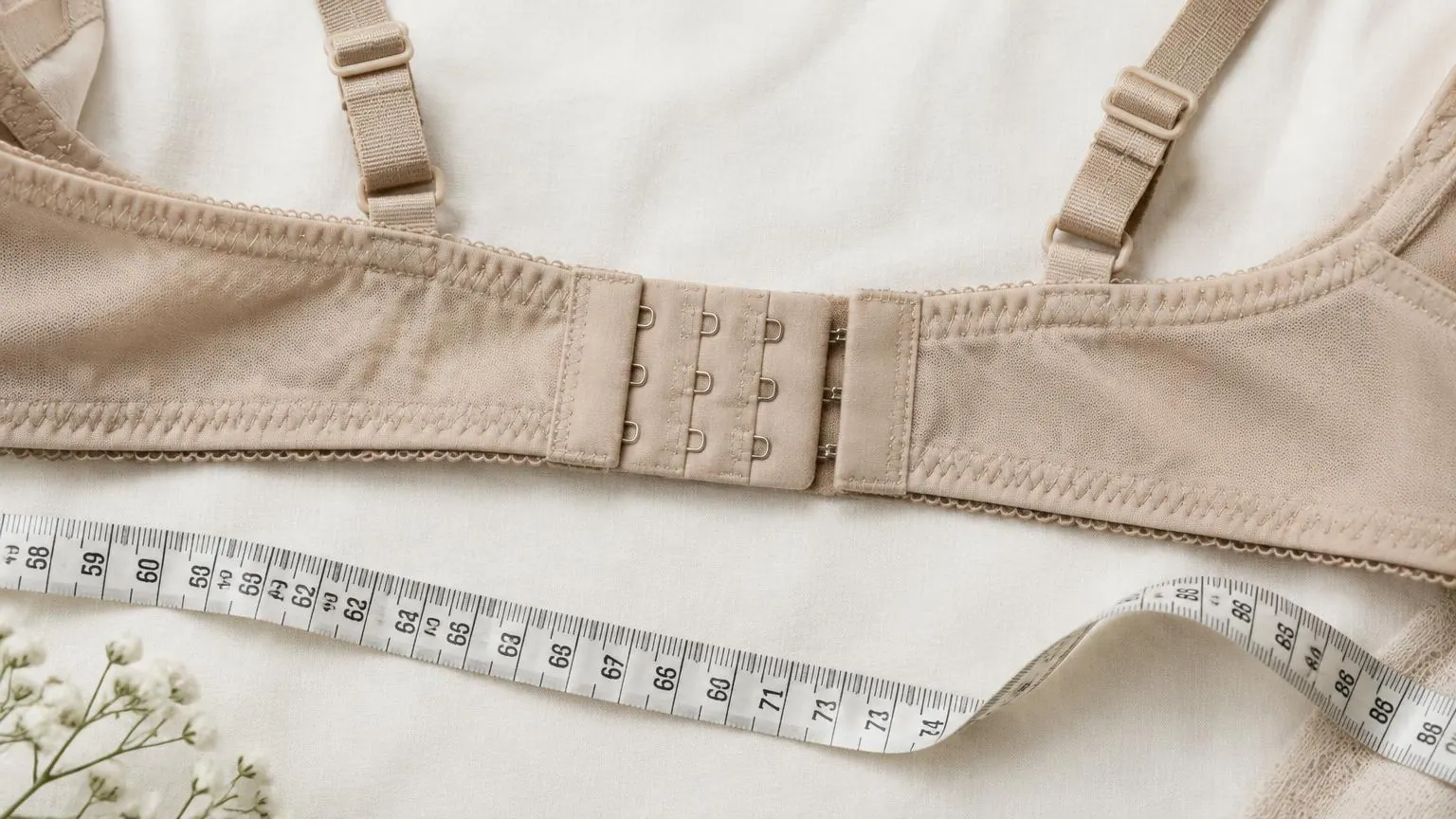
The University of Portsmouth's guide describes a band that sits firmly and doesn't slide, but isn't so tight that it's uncomfortable, affects your breathing or makes flesh bulge at the edges (OpenLearn / University of Portsmouth).
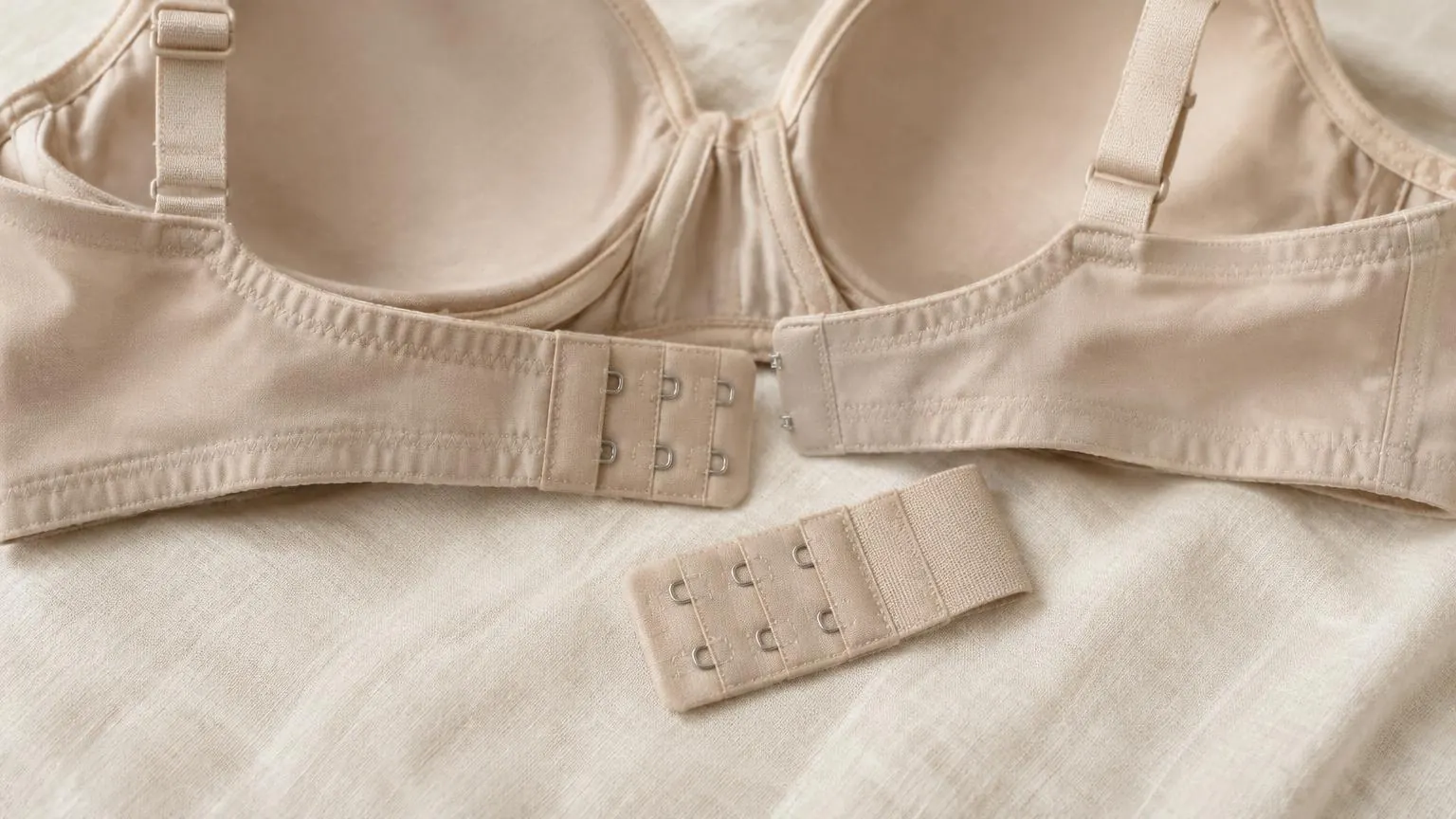
What to try: move to the loosest hooks. Breast Cancer Now suggests starting a new bra there anyway, so you can tighten it as it stretches (Breast Cancer Now). If the cups fit but the band still presses, compare a looser band without accidentally adding cup room. Our size and shape guide explains how UK sister sizes work. Our band guide covers this in more detail.
2. The cups cut in or overflow
Your breasts should sit inside the cups without bulging over the top, bottom or sides. If one breast is larger, fit the cups to that side (Breast Cancer Now).
What to try: lean forward and settle your breasts into the cups before you judge them. If they still overflow, compare more cup room. A size label combines a band number and a cup letter; if the band fits, keep it the same while comparing the next cup size in the brand’s system.
3. The wire sits on breast tissue
A wire should follow the natural crease under the breast and not rest on breast tissue (OpenLearn / University of Portsmouth). It should lie flat around the breast without digging in or gaping (Breast Cancer Now).
What to try: check the wire at the side, under your arm, as well as underneath. If it sits on tissue, compare a larger cup letter on the same band. If it sits in the right place but still digs, the wire shape may not suit you, so try another style or a wireless bra.
4. The straps dig into your shoulders
Straps should sit close without digging, and add support without carrying the whole weight of your breasts (Breast Cancer Now).
What to try: lengthen the straps a little and see whether they still stay put. If the bra feels unstable once they're looser, check the band and cups again rather than tightening the straps back up.
5. One spot rubs or presses
Sometimes the problem isn't the size at all. Check whether the sore spot lines up with a seam, label, elastic edge, wire end or the hook fastening. If it does, a style with smoother construction may be more comfortable.
Red marks on their own aren't a reliable sizing test. Judge the bra on the checks above: a level band, cups that contain you, and wires and straps that don't dig (Breast Cancer Now).
Keep track of what you change
Note where the discomfort is and change one thing per try-on:
- Band pressure: looser hooks, or a sister size up.
- Cups cutting in: a larger cup letter on the same band, or a different cut.
- Wire pressure: check cup volume first, then wire shape.
- Strap pressure: strap length, then recheck the band.
- One rubbing point: seams, labels and construction.
Sizes vary between brands and styles, so judge the bra you're wearing rather than the label (Breast Cancer Now). Check the label’s sizing system before changing cup letters; see our international sizing guide.
When it's not a fit problem
A rash under the breast can't tell you which size to buy. Breast Cancer Now suggests seeing a doctor, because other skin conditions can look like intertrigo (Breast Cancer Now).
If you have pain that continues, or numbness, speak to a doctor rather than trying more bras. The NHS advises seeing a GP for breast pain that doesn't improve, and getting urgent advice for a red, hot or swollen breast, a hard lump, nipple discharge or a change in shape (NHS).
Sources and further reading
External pages referenced in this guide. Brand fitting guides describe that brand's own sizing; check each brand's chart.
- Your guide to a well-fitting bra (Breast Cancer Now, PDF) (breastcancernow.org)
- Getting the right fit: five-point bra fit guide (University of Portsmouth, via OpenLearn) (open.edu)
- Intertrigo (rash under the breast) (Breast Cancer Now) (breastcancernow.org)
- Breast pain (NHS) (nhs.uk)
Report an outdated detail or broken link
Found something out of date, or a source link that no longer works? Let us know. We read every report and fix errors as described in our corrections policy.
Keep reading