25 Bra Types Explained: Construction, Purpose and Fit
Understand 25 overlapping bra types, from full-cup and plunge to sports and nursing styles, with a concise purpose and practical fit note for each.
By US Hosiery EditorialPublished Updated 5 min read
The short answer
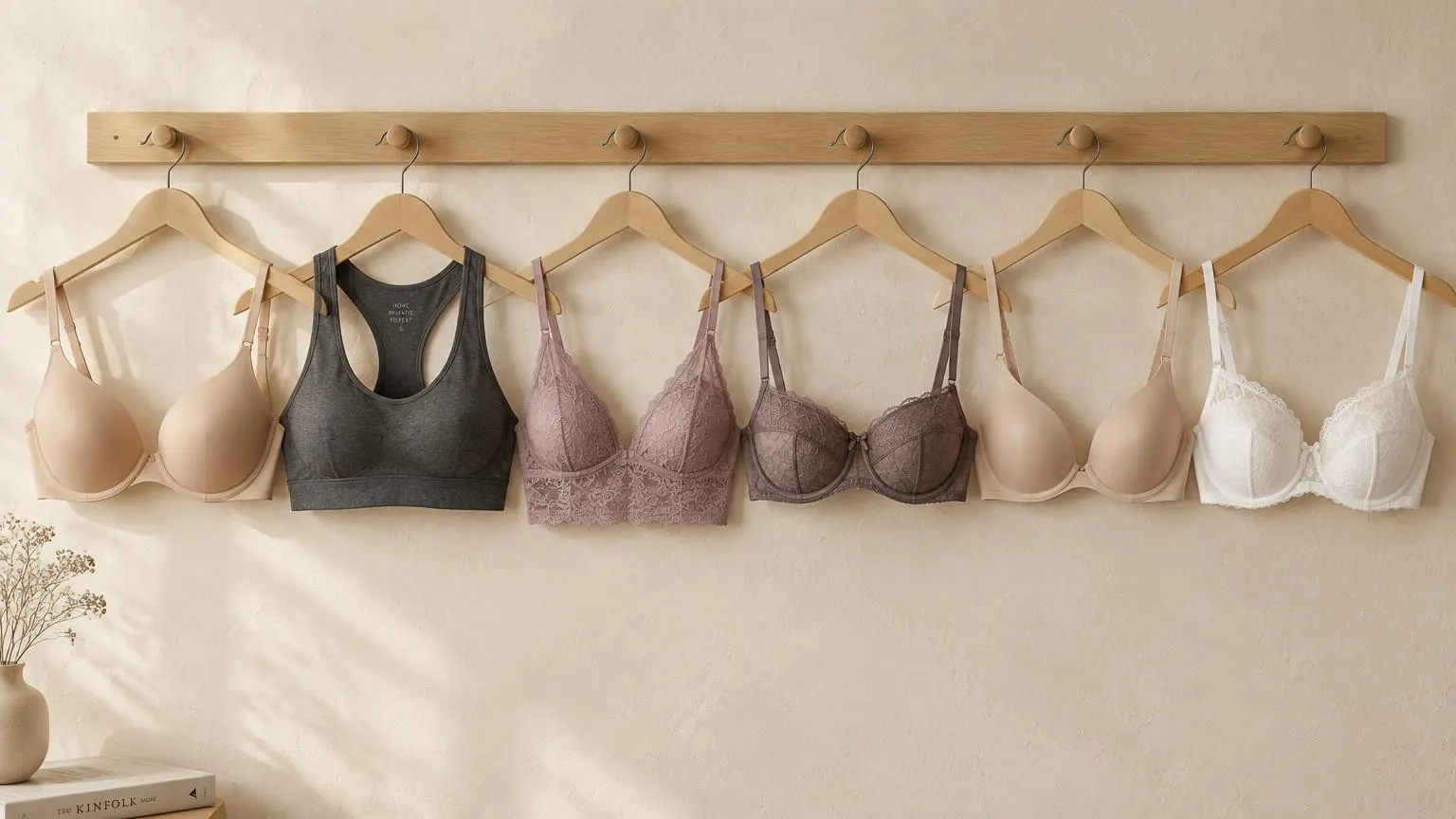
Bra labels describe coverage, construction or purpose, so several can apply to one garment. Compare these 25 types by what they are built for and what to check during a try-on.
In this guide
- The short answer
- 1. T-shirt bra
- 2. Full-cup bra
- 3. Balconette bra
- 4. Half-cup or demi bra
- 5. Plunge bra
- 6. Wired bra
- 7. Non-wired bra
- 8. Bralette
- 9. Padded bra
- 10. Non-padded bra
- 11. Sports bra
- 12. Strapless bra
- 13. Convertible bra
- 14. Racerback bra
- 15. Front-fastening bra
- 16. Longline bra
- 17. Bandeau
- 18. Seamed-cup bra
- 19. Lace bra
- 20. Lounge bra
- 21. Sleep bra
- 22. Maternity bra
- 23. Nursing bra
- 24. Post-surgery bra
- 25. Pocketed bra
- Check fit separately from the style name
The short answer
Choose by purpose, coverage and comfort—not by collecting every type. Bra labels overlap: a T-shirt bra can also be full-cup, plunge, padded or non-padded (Bravissimo).
The 25 entries below separate common construction and purpose labels. Each explains the label and gives you a fit check to try.
1. T-shirt bra
A bra with moulded, seam-free cups, intended to give a smooth finish under clothing. It can come in different cup cuts and with or without padding (Bravissimo). Fit note: try it under your top and check the cup edges to see whether the moulded shape sits smoothly against you.
2. Full-cup bra
A fuller-coverage cup style, built for coverage across more of the breast (Bravissimo). Fit note: check the upper edge for gaps or pressure; more coverage does not remove the need for a comfortable cup shape.
3. Balconette bra
Also called a balcony bra, this has less all-over coverage than a full-cup style, with straps joining towards the sides of the cups. It is an option for lower necklines (Bravissimo). Fit note: compare the strap position as well as the cup edge.
4. Half-cup or demi bra
A lower-coverage cup cut, sometimes called a demi-cup, intended for lower-cut tops and dresses (Bravissimo). Fit note: move and lean during a try-on to check whether you stay comfortably contained above the lower-cut upper edge.
5. Plunge bra
A bra with a low centre front and angled cups, built for low-cut necklines (Bravissimo). Fit note: the very low centre may not touch your breastbone fully. Check that the cups contain you comfortably and the centre doesn’t dig.
6. Wired bra
A bra with wires following the lower cup contour, providing a defined cup framework. Breast Cancer Now's fit guide describes wires sitting around the breast contour without digging in or gaping (Breast Cancer Now). Fit note: reject a wire that presses on breast tissue; do not tighten the straps to disguise it.
7. Non-wired bra
A bra without underwires, built for wearers who prefer that construction (Bravissimo). Fit note: still check the band and cup edges. The band and cups still need to fit comfortably.
8. Bralette
A style that tends to be non-wired and lighter in construction, although wired versions exist (Bravissimo). Fit note: try sitting and reaching in it; check that the band and straps stay comfortable in both positions.
9. Padded bra
Here, ‘padded’ means a cup containing an added padding layer. Use the label to identify construction, not a particular neckline or purpose. Fit note: compare the actual thickness and cup shape. Padding is not a fibre, so a bra can be both padded and cotton-rich.
10. Non-padded bra
A bra without a padding layer in the cups; it may still have other lining or structure. Both padded and non-padded T-shirt styles exist (Bravissimo). Fit note: check how the seams and edges feel against your skin.
11. Sports bra
A bra built to increase comfort while minimising breast movement during activity (Breast Cancer Now). Fit note: try movements similar to your activity. For activity and support comparisons, see how to choose a sports bra.
12. Strapless bra
A bra designed to be worn without shoulder straps, for strapless or open-shouldered clothing. Some use wider bands or grip details (Bravissimo). Fit note: check whether it stays in place while moving; painful tightness is not a useful substitute for stability.
13. Convertible bra
Here, this means a bra whose straps can be detached or rearranged using the garment's designated attachment points. It is built for different outfit layouts. Fit note: test the exact arrangement you intend to wear and follow the garment instructions; do not assume every configuration is supported.
14. Racerback bra
A back construction with straps meeting or drawing together towards the centre, useful when that strap layout suits your top or activity. Fit note: check the feel around your neck and shoulders. The back shape alone does not tell you the garment's support level.
15. Front-fastening bra
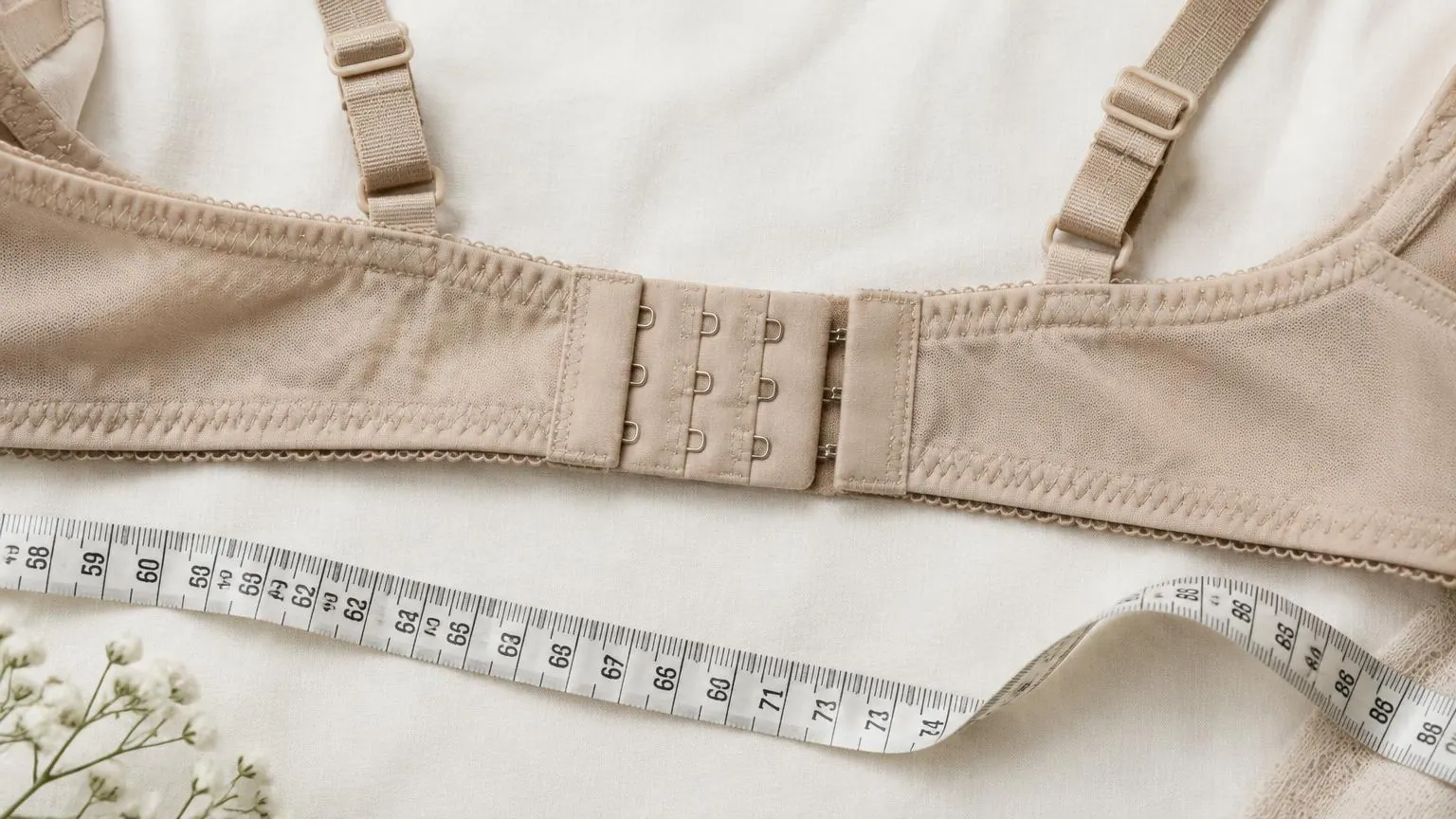
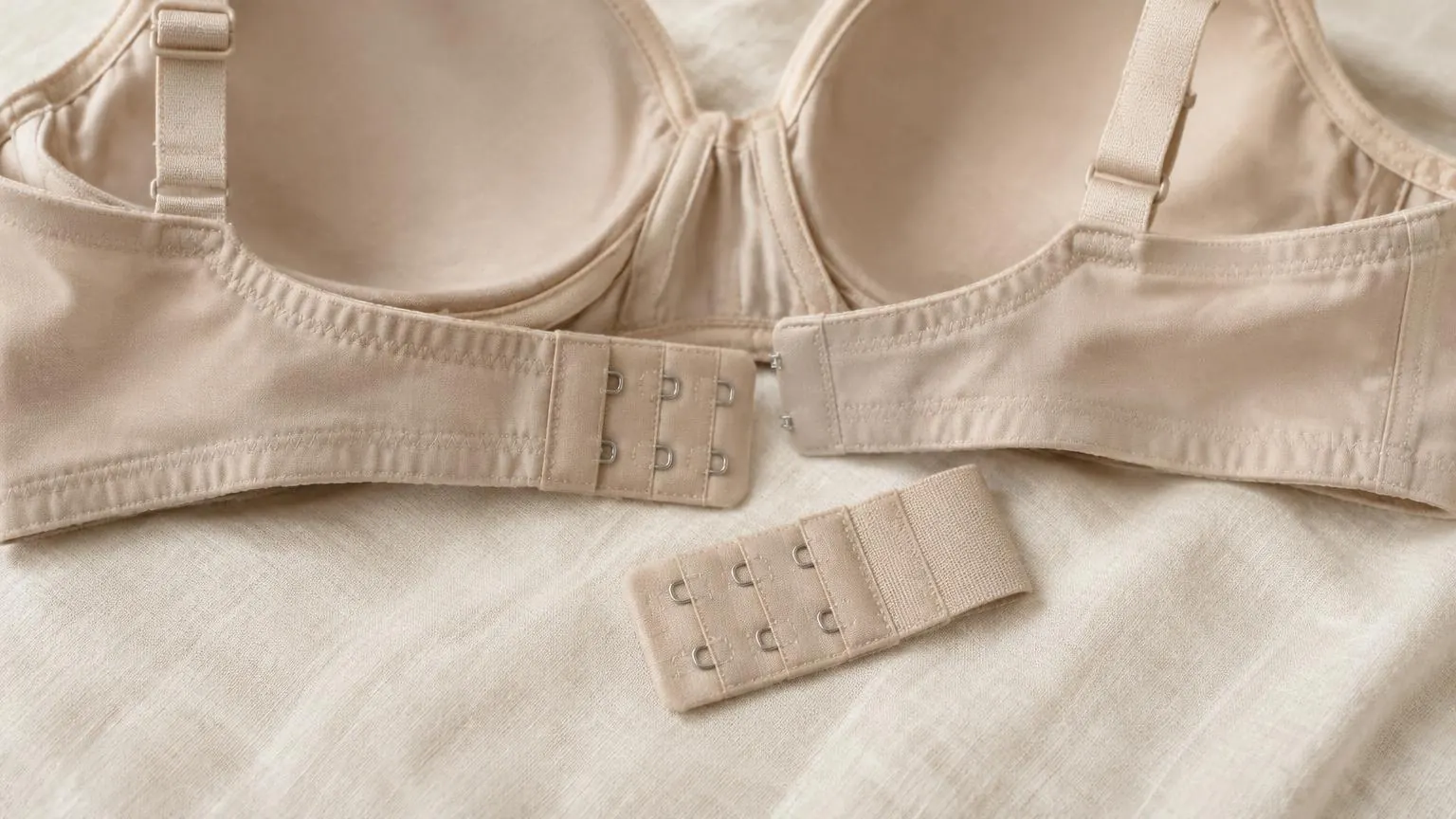
A bra with its fastening between the cups rather than at the back, built for front access when dressing (Bravissimo). Fit note: practise opening and closing it and check what band adjustment, if any, the garment offers.
16. Longline bra
A bra with a band extending farther down the torso than a standard narrow underband. Choose it when you prefer an extended-band construction. Fit note: sit and bend during the try-on to check whether its lower edge rolls or presses.
17. Bandeau
A band-shaped top worn across the chest, often chosen for a simple strap-free layer. Construction varies, so inspect the actual garment rather than relying on the name. Fit note: reach overhead and check for slipping or rolling; do not assume it performs like a structured strapless bra.
18. Seamed-cup bra
A bra with cups assembled from fabric panels joined by seams. This describes construction rather than coverage or activity. Fit note: feel the inside seams and try the bra under your intended clothing if visible texture matters to you.
19. Lace bra
A bra using lace as part of its fabric or trim. The label describes material or decoration, not its support purpose. Fit note: check which surfaces touch your skin and whether they feel comfortable; a lining and an outer lace layer may feel quite different.
20. Lounge bra
A label used for bras intended for relaxed wear; it does not identify one precise construction. Check what feels comfortable to you. Fit note: try sitting and reclining, and check for fastenings or seams that press in those positions.
21. Sleep bra
A style intended for optional support while sleeping or resting, commonly using a soft, non-wired construction (Bravissimo). Fit note: check comfort in your usual sleeping positions. The label does not mean everyone needs to wear one.
22. Maternity bra
A maternity bra can be any bra that fits well during pregnancy, rather than a single mandatory construction (Bravissimo). Fit note: reassess the current fit instead of choosing by the label alone.
23. Nursing bra
A bra designed to provide feeding access, commonly through drop-down cups (Bravissimo). Fit note: practise the opening and closing mechanism, then check that the closed cup edges and band remain comfortable.
24. Post-surgery bra
A purpose-specific label for bras worn after breast surgery. Breast Cancer Now advises following your surgeon's or breast care nurse's guidance; early recommendations may include soft, non-wired, supportive but non-restrictive styles (Breast Cancer Now). Fit note: clinical instructions take priority over a general style guide.
25. Pocketed bra
A bra with internal pockets intended to hold a breast prosthesis; pockets appear in some mastectomy and post-surgery styles (Bravissimo). Fit note: check the intended insert and garment together, and follow your breast care team's advice where relevant.
Check fit separately from the style name
Whatever the label, look for a level band, cups that contain the breasts without gaps or bulging, and straps that fit closely without digging in. In wired styles, check the wire contour too (Breast Cancer Now).
If you use UK sizing, the number describes the band and the cup letter is relative to that band. Separate band fit, cup volume and cup shape when deciding what to try next. A different style may change the shape without solving a volume mismatch.
Measurements are only a starting point because sizes vary between brands and styles (Breast Cancer Now). Cup letters after D differ between UK, US and European systems; see our international sizing guide.
For help choosing by outfit and support preference, use the core-style overview.
Sources and further reading
External pages referenced in this guide. Brand fitting guides describe that brand's own sizing; check each brand's chart.
- Types of Bra Explained: Bra Style Guide (Bravissimo) (bravissimo.com)
- Your guide to a well-fitting bra (Breast Cancer Now, PDF) (breastcancernow.org)
- Bras after surgery for breast cancer (Breast Cancer Now) (breastcancernow.org)
Report an outdated detail or broken link
Found something out of date, or a source link that no longer works? Let us know. We read every report and fix errors as described in our corrections policy.
Keep reading