Core Bra Styles: A Short Guide to Choosing
A short introduction to everyday, full-cup, plunge, wireless, sports and strapless bras, with practical fit checks and a link to our full 25-type guide.
By US Hosiery EditorialPublished Updated 2 min read
The short answer
Start with the job you want a bra to do, then compare coverage and construction. This short overview covers the core choices; the full guide explains 25 overlapping style labels.
In this guide
The short answer
Start with the purpose: everyday wear, exercise or a particular neckline. Then compare the coverage and construction you prefer. You do not need every style—or a prescribed set of ‘essentials’.
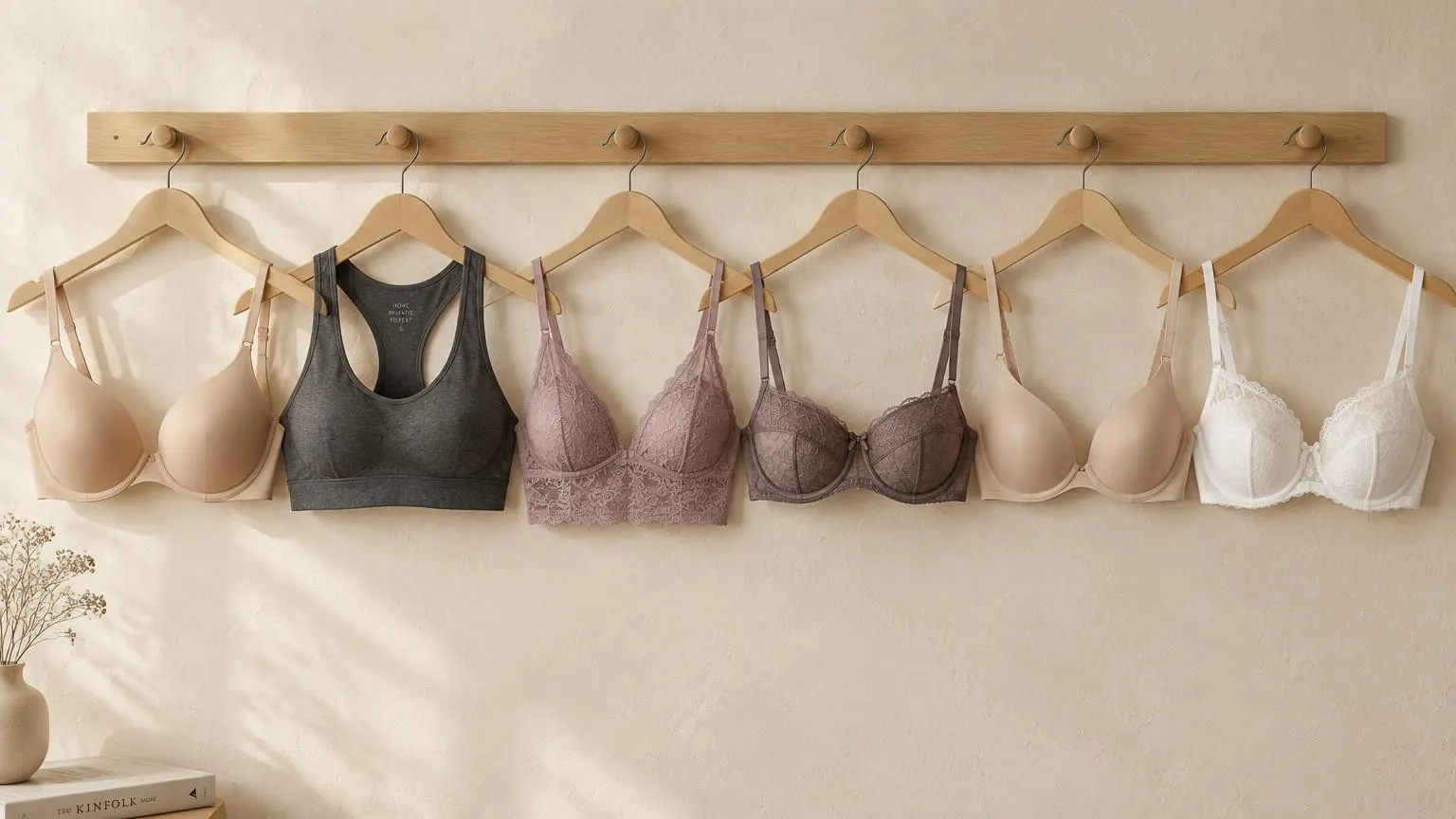
Bra names overlap. A T-shirt bra, for example, can also be a plunge or full-cup style and may be padded or non-padded (Bravissimo). Use the names as a way to narrow your search, not as proof of fit.
For a longer reference, see our guide to 25 bra types. This page covers only the core choices.
Choose for the outfit or activity
Start with the row closest to what you need today. These are options to compare, not a list of bras you have to own. The style descriptions follow Bravissimo’s guide; sports bras are designed to increase comfort while minimising movement (Breast Cancer Now).
| What you need | Start by trying | Check before choosing |
|---|---|---|
| A smooth finish under a fitted top | A T-shirt bra | Cup edges and the moulded shape under that top |
| More coverage across the breast | A full-cup style | The upper edge stays comfortable when you reach |
| A low neckline | A plunge | The centre stays hidden and the cups contain you when you lean |
| A wider, lower neckline | A balconette | Cup edges and strap position fit within the neckline |
| Bare shoulders | A strapless bra | It stays in place without painful tightness |
| Support for exercise | A sports bra | It feels comfortable during movements from your activity |
| No underwire | A non-wired bra or bralette | The band, cups and straps give the support you want |
For exercise, our sports-bra guide explains how to compare support by activity. A soft everyday bra needn't do the same job as a bra you wear for running.
Let comfort narrow the choice
If you prefer wires, check that they sit around the breast contour without digging in or gaping. With or without wires, look for a level band, cups that contain your breasts and straps that don't dig in (Breast Cancer Now).
Padding, fabric and coverage are separate choices. A cotton-rich bra can be padded, and a non-wired bra can have structured cups. Compare two garments with the same outfit to see which combination you prefer.
You don't have to change styles just because a chart recommends one for your shape. If a seamed bra feels better than a moulded one, or you prefer a visible strap to a strapless band, that can be the better choice for you. For very sheer clothing, an extra underlayer may suit you better than changing bras again.
Make the final choice in a try-on
Try this sequence:
- Choose the purpose and coverage you want.
- Adjust the straps and check the band.
- Look for cup gaps, overflow or edges that press.
- Sit, reach and move in the garment.
- Compare another construction if the first one does not feel right.
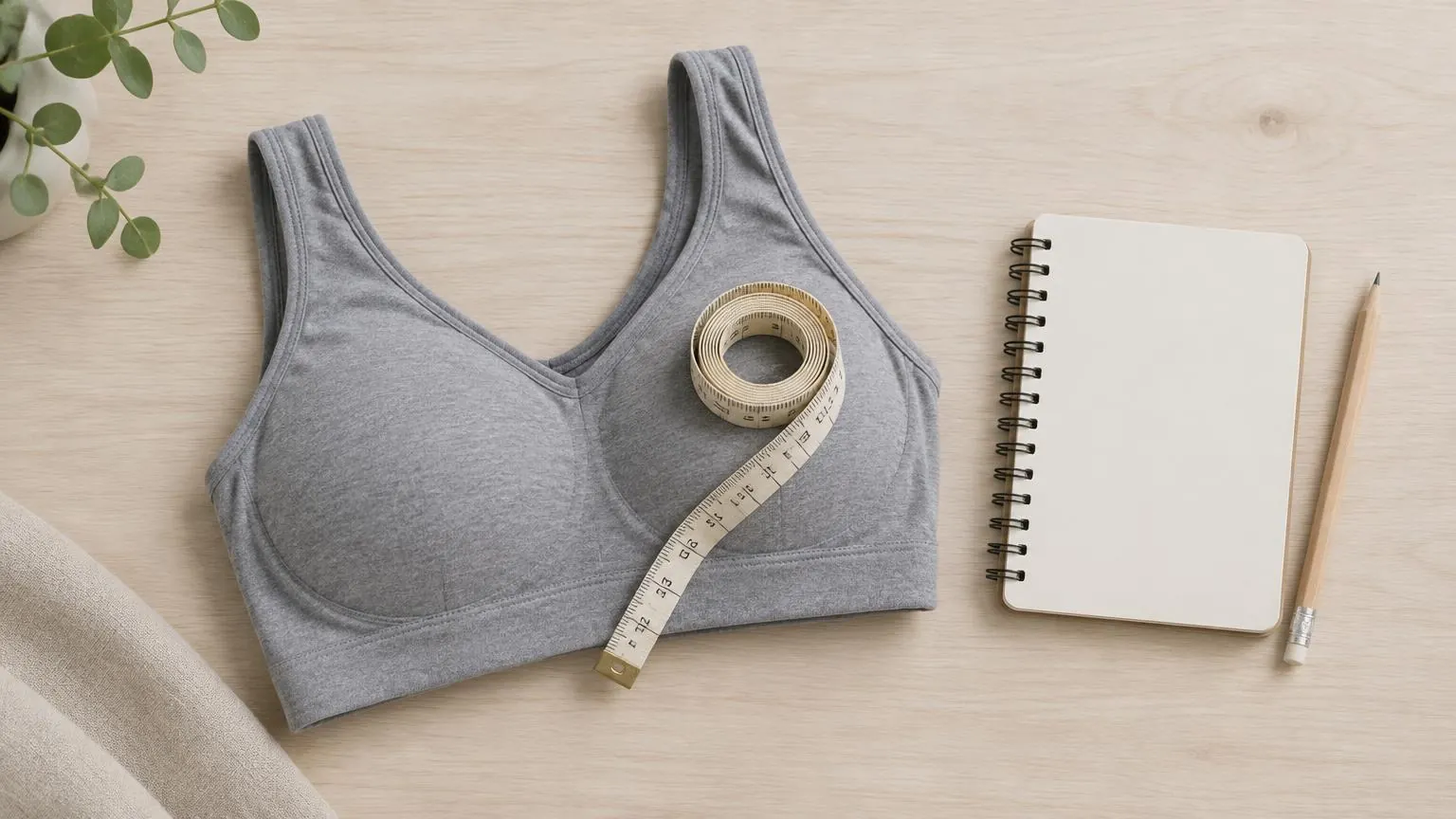
Breast Cancer Now advises using a measured size only as a guide because sizes vary between brands and styles (Breast Cancer Now).
If you are comparing UK size labels, the number describes the band and the letter describes the cup relative to it. Keep band fit, cup volume and cup shape separate when deciding what to change. For other systems, especially cup letters after D, see our international sizing guide.
Sources and further reading
External pages referenced in this guide. Brand fitting guides describe that brand's own sizing; check each brand's chart.
- Types of Bra Explained: Bra Style Guide (Bravissimo) (bravissimo.com)
- Your guide to a well-fitting bra (Breast Cancer Now, PDF) (breastcancernow.org)
Report an outdated detail or broken link
Found something out of date, or a source link that no longer works? Let us know. We read every report and fix errors as described in our corrections policy.
Keep reading