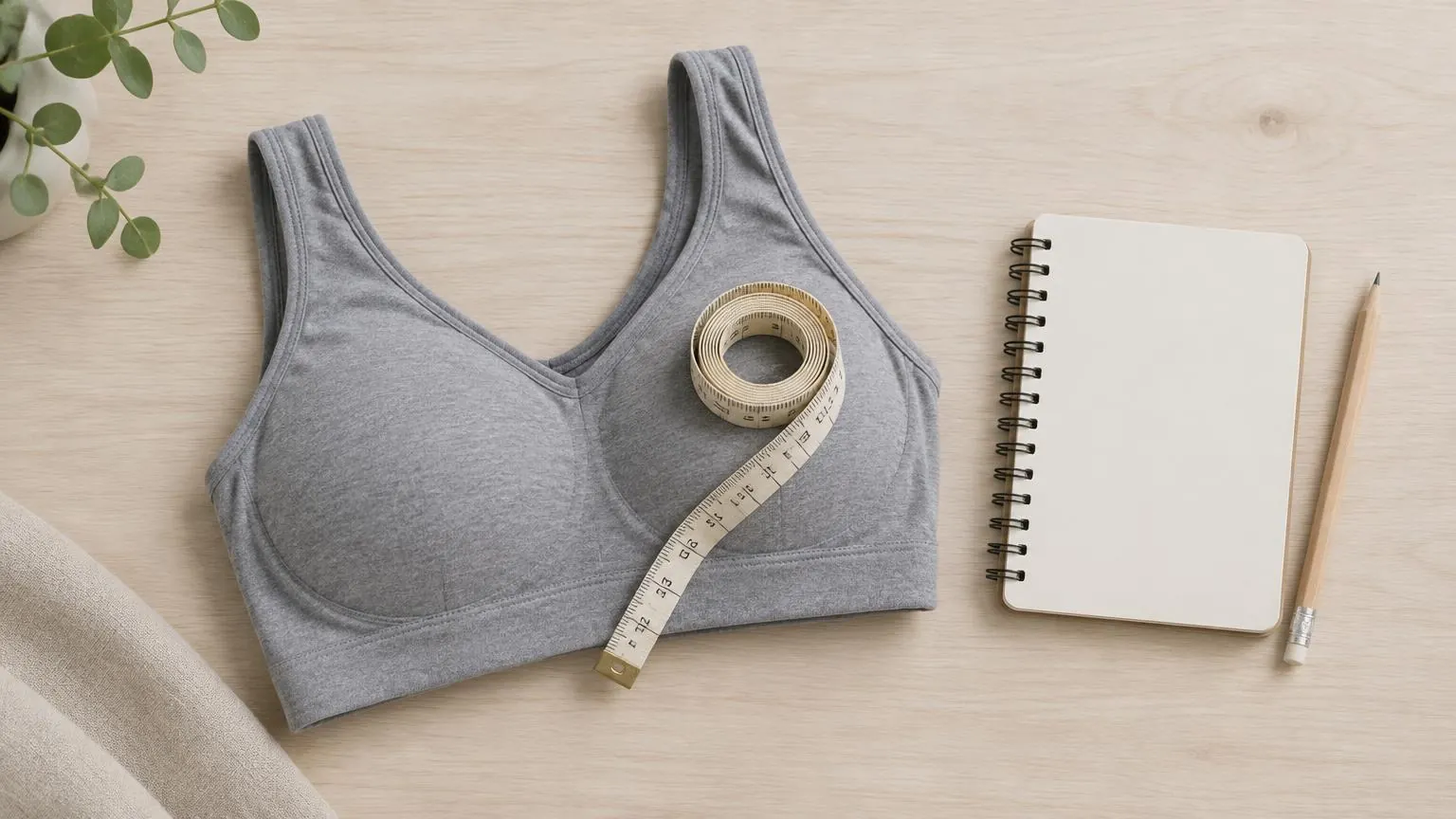
How Tight Should a Bra Be? A Quick Whole-Bra Check
A short whole-bra check: a firm band, cups that contain you and straps that don't dig. Then choose the right next step if something presses or shifts.
By US Hosiery EditorialPublished Updated 3 min read
The short answer
Check the band, cups, wire and straps together. The band should be firm and level, the cups should contain you without overflow, and nothing should dig. Move and sit before you decide.
In this guide
Use this quick check when you try on a bra, or when you're wondering whether one you already own still fits. You don't need a tape measure for it. Look at each part of the bra, then move in it.
The short answer
A bra should feel secure without pressing uncomfortably anywhere. The band should be firm and level, the cups should contain your breasts without bulging or gaping, and the straps should stay put without digging in. These are the main points in the University of Portsmouth's five-point fit guide (OpenLearn / University of Portsmouth).
Put it on properly first
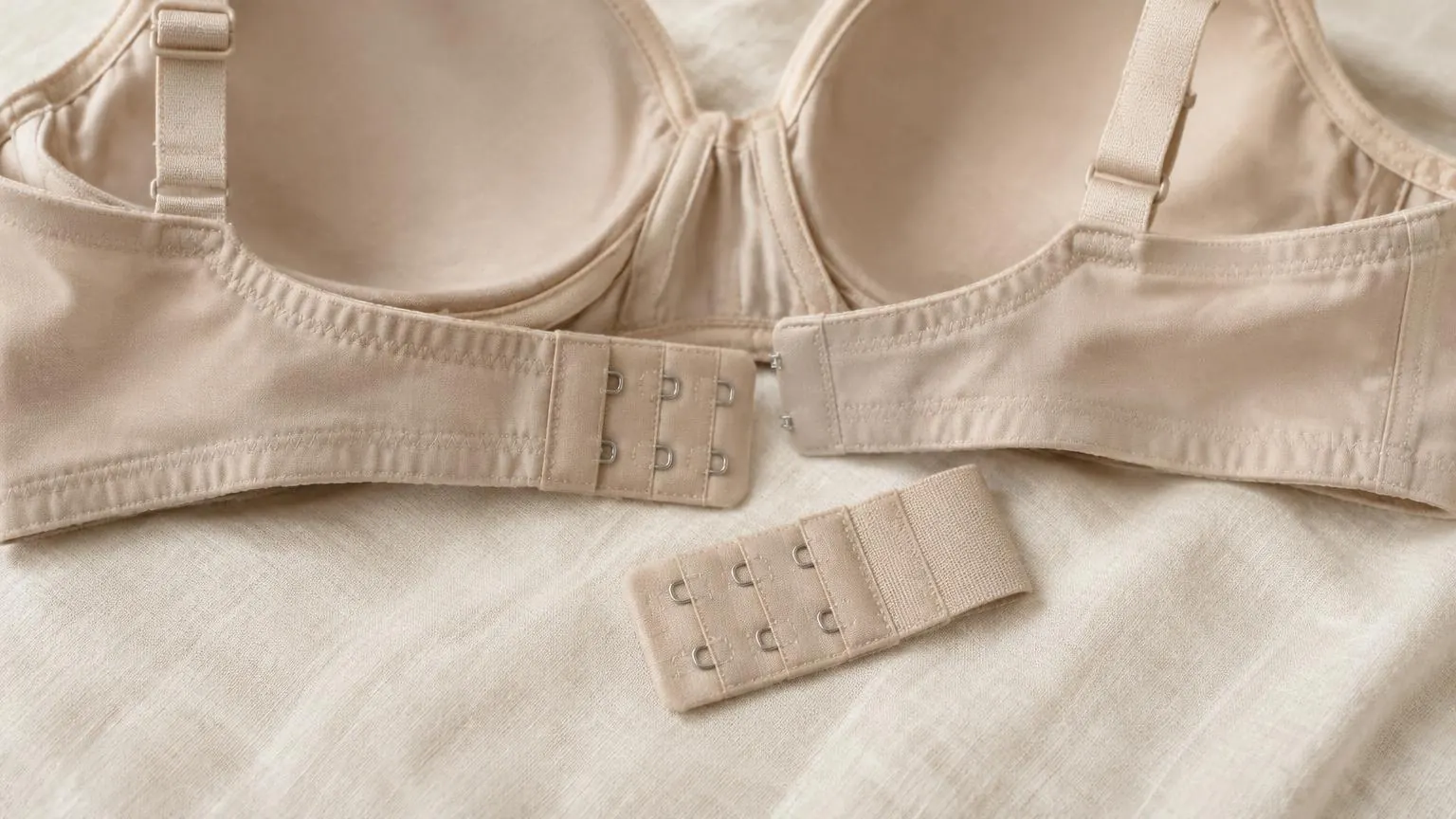
Lean forward so your breasts settle into the cups. On a new bra, use the loosest hooks and check the band is level front and back. Breast Cancer Now suggests this so you can tighten the bra as it stretches (Breast Cancer Now). Then adjust the straps.
Check each part
The checks below come from the Breast Cancer Now and University of Portsmouth fit guides cited in this article. The last column lists things to try, not a diagnosis.
| Part | What to look for | If it isn't right |
|---|---|---|
| Band | Firm, level, stays put when you move | Try another hook, then a different band size |
| Cups | Breasts contained, no overflow or loose fabric | Compare a different cup letter or cut |
| Underwire, if any | Follows the crease under the breast, not on breast tissue | Check cup volume, then wire shape |
| Straps | Close without slipping or digging | Adjust the length, then recheck the band |
| Centre front, in wired bras | Sits flat rather than lifting away | Check the cups before changing the band |
A centre front that lifts away can mean you need a larger cup (OpenLearn / University of Portsmouth). Look at the wired centre itself, not the open space above a low plunge. With a soft wireless centre, focus on comfortable containment and whether the bra stays in place.
Move before you decide
Lift your arms and check that the bra stays in place, as Breast Cancer Now's checklist suggests (Breast Cancer Now). Then sit down, reach forward and put on a top you often wear. A light-coloured T-shirt can show where a bra doesn't fit well (same source). Notice whether you want to pull the band down, rearrange the cups or loosen a strap.
Pick one next step
If only the band feels wrong, use the band adjustment guide to compare hooks, extenders and band fit. If you can't tell whether the cup is too small or simply the wrong cut, the size and shape guide explains that distinction.
For discomfort that appears only once you're at your desk, compare the seated fit checks before deciding what to replace.
Sizes vary between brands and styles, so judge the bra you have on rather than the number on the label (Breast Cancer Now).
Should a new bra feel uncomfortable?
A different feel from your old bra is no reason to put up with pain. If it's uncomfortable on the loosest hooks, try a different size or style. The aim is a band that's firm without being uncomfortably tight (OpenLearn / University of Portsmouth), not the tightest one you can put up with.
If pain carries on, speak to a doctor rather than trying more bras. The NHS advises seeing a GP for breast pain that doesn't improve, and getting urgent advice for a red, hot or swollen breast, a hard lump, nipple discharge or a change in shape (NHS).
Sources and further reading
External pages referenced in this guide. Brand fitting guides describe that brand's own sizing; check each brand's chart.
- Your guide to a well-fitting bra (Breast Cancer Now, PDF) (breastcancernow.org)
- Getting the right fit: five-point bra fit guide (University of Portsmouth, via OpenLearn) (open.edu)
- Breast pain (NHS) (nhs.uk)
Report an outdated detail or broken link
Found something out of date, or a source link that no longer works? Let us know. We read every report and fix errors as described in our corrections policy.
Keep reading