How to Measure Your Bra Size at Home
Measure your underbust and bust in inches or centimetres, use the brand’s own size guide, then check band fit, cup volume and cup shape.
By US Hosiery EditorialPublished Updated 4 min read
The short answer
Record your underbust and bust measurements, then follow the measuring method and chart for the brand you want to try. The result is a starting point: band fit, cup volume and cup shape need separate checks.
In this guide
A tape measure gives you useful numbers to take to a brand’s size guide. It cannot tell you everything about how a bra will fit.
The short answer
Measure around your body directly beneath your breasts, then around the fullest part of your bust. Record both measurements in inches or centimetres, keeping the units consistent. Use the measuring instructions and chart supplied by the brand you want to try, rather than a universal formula.
The suggested size is a starting point. Breast Cancer Now says measured sizes are a guide because fit varies between makes and styles (Breast Cancer Now).
Take your measurements
These steps record two measurements. If a brand asks for a different posture, tape tension or additional measurements, follow its instructions when using its chart.
Have a flexible measuring tape, a mirror and somewhere to record the numbers. Check whether your chosen brand asks you to measure with or without a bra.
Measure your underbust
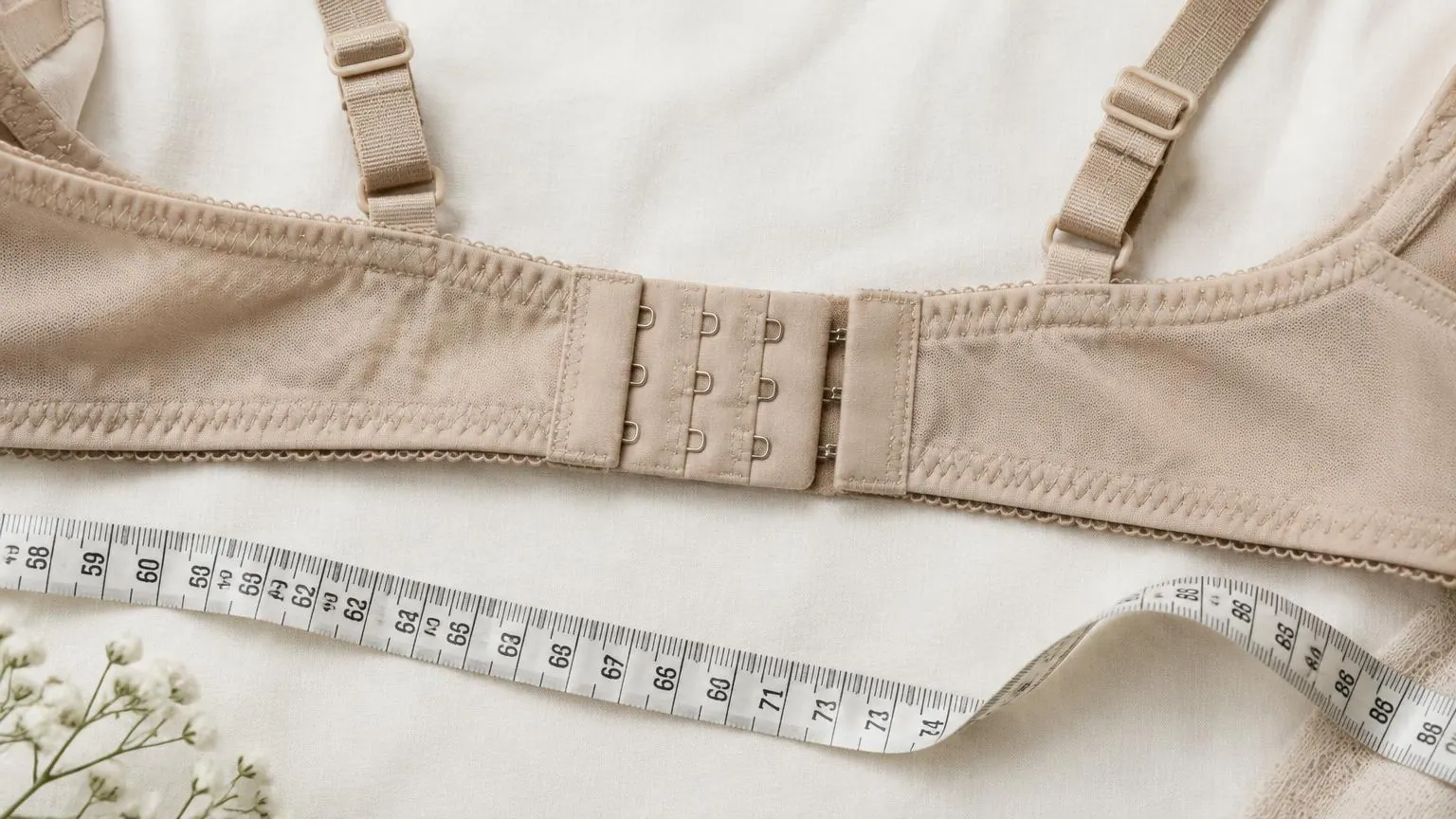
Wrap the tape around your body directly beneath your breasts, where the underband sits. Use the mirror to check that it is level around your back.
Keep it snug without pulling it painfully tight. Stand comfortably and breathe normally. Write down the measurement and its unit; do not add inches or round it into a labelled band size yet.
Measure your bust
Pass the tape around the fullest part of your bust. Keep it level and avoid pulling it into the breast tissue.
Write down this measurement in the same unit as your underbust. Repeat both measurements if the tape slipped or the readings seem inconsistent.
Keep inches and centimetres separate
You can record both units, but use the unit requested by the brand’s chart. Our inch–centimetre converter converts the measurements; it does not calculate a bra size.
Keep your original readings so you can use another brand’s instructions without having to reverse an earlier rounding step.
Use the brand’s method, not a universal calculation
Brands use different measuring methods and charts. Some add inches to the underbust when choosing a band label; others do not. Follow the chart’s own instructions rather than combining the band calculation from one method with the cup calculation from another.
Do not assume that your underbust measurement is automatically your band label, or that one bust-minus-underbust difference produces the same cup letter everywhere.
In a UK study of 45 women, the traditional tape-measure method overestimated band size and underestimated cup size compared with professional fit criteria. The authors recommended putting less emphasis on absolute size and learning fit checks (White & Scurr, 2012).
If a chart gives you two possible sizes, compare both on your body. Don’t choose the tighter one automatically.
If the chart is difficult to use
- Your readings sit between ranges: follow any rounding advice on that chart. If none is given, keep the unrounded readings and compare the neighbouring options, or ask the brand which to start with.
- The chart asks for a method you haven’t used: measure again using its instructions. Don’t adjust your earlier result by guessing.
- The suggested size is unavailable: look for a chart that includes your readings or ask for fitting help. Don’t squeeze into the nearest stocked label.
- Two brands give different labels: keep each result with its brand name. Try-on fit decides which garment works, not whether the labels agree.
Understand the label
The examples here use UK sizing. A label such as 34D combines a band number with a cup letter. The band describes the fit around your back; the cups hold your breasts (Breast Cancer Now).
Check band fit, cup volume and cup shape separately. If the chart’s suggestion doesn't fit, our size and shape guide explains which change to try, including UK sister sizes. Don't convert a cup letter on its own: the band matters too.
Cup naming after D differs between UK, US and European systems; see our international sizing guide. Check whether the brand is showing its original size label or a regional conversion before you order.
Check the bra on your body
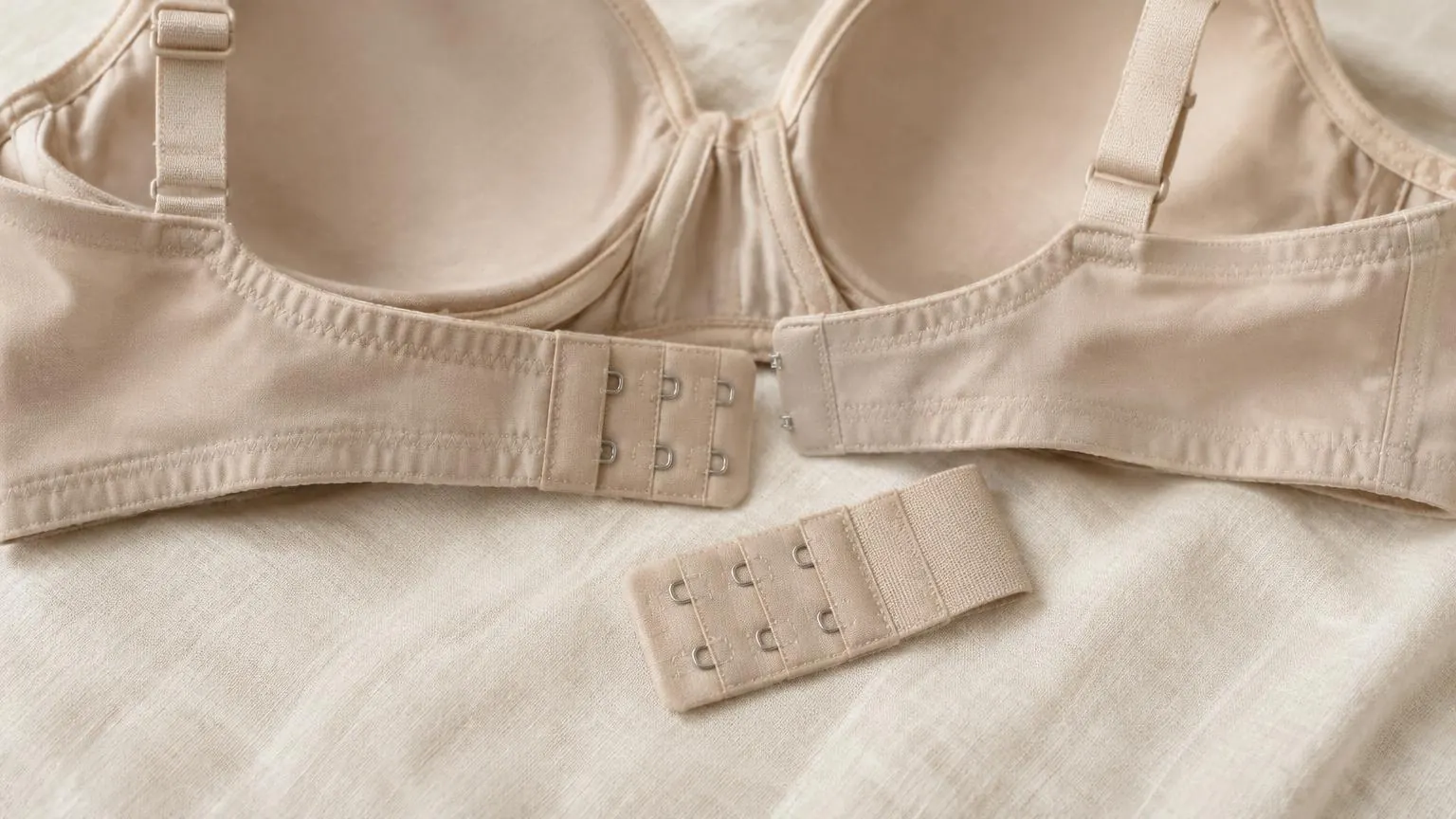
Lean forward to settle your breasts into the cups. With a new bra, use the loosest hooks so there is room to tighten it as it stretches (Breast Cancer Now).
Check these points before accepting the chart’s suggestion:
- Band: firm and level around your body, without sliding as you move or feeling uncomfortably tight.
- Cups: breasts enclosed without bulging or gaping.
- Underwire, if present: follows the crease beneath the breast rather than resting on breast tissue.
- Centre front of a wired bra: check that the wired section sits flat; lifting away can be a clue that more cup room is needed. A soft wireless centre isn’t the same fit test.
- Straps: comfortable, without digging or slipping.
These checks follow the University of Portsmouth guide. Also lift your arms and check that the bra stays in place; where your breasts differ in size, fit the cup to the larger side (Breast Cancer Now).
Sit down and reach forward too. Change one feature at a time and repeat the checks. You can use our bra fit checklist to keep track.
When should you measure again?
Remeasure when your current bras no longer fit comfortably rather than relying on a fixed timetable. Breast size and shape can change with the menstrual cycle, pregnancy, breastfeeding, menopause and weight changes (Breast Cancer Now).
Keep a note of the brand, style, labelled size and what did or did not fit. That gives you a useful reference without turning one successful label into a rule for every bra.
Sources and further reading
External pages referenced in this guide. Brand fitting guides describe that brand's own sizing; check each brand's chart.
- Your guide to a well-fitting bra (Breast Cancer Now, PDF) (breastcancernow.org)
- Evaluation of professional bra fitting criteria (White & Scurr, Ergonomics, 2012) (pubmed.ncbi.nlm.nih.gov)
- Getting the right fit: five-point bra fit guide (University of Portsmouth, via OpenLearn) (open.edu)
Report an outdated detail or broken link
Found something out of date, or a source link that no longer works? Let us know. We read every report and fix errors as described in our corrections policy.
Keep reading