
Fabrics & Care
How to Judge Bra Breathability in Hot Weather
Learn to separate breathability, absorbency, drying time and wicking, then check mesh, lining, padding and fit without relying on cooling claims.
2 min read
Guides
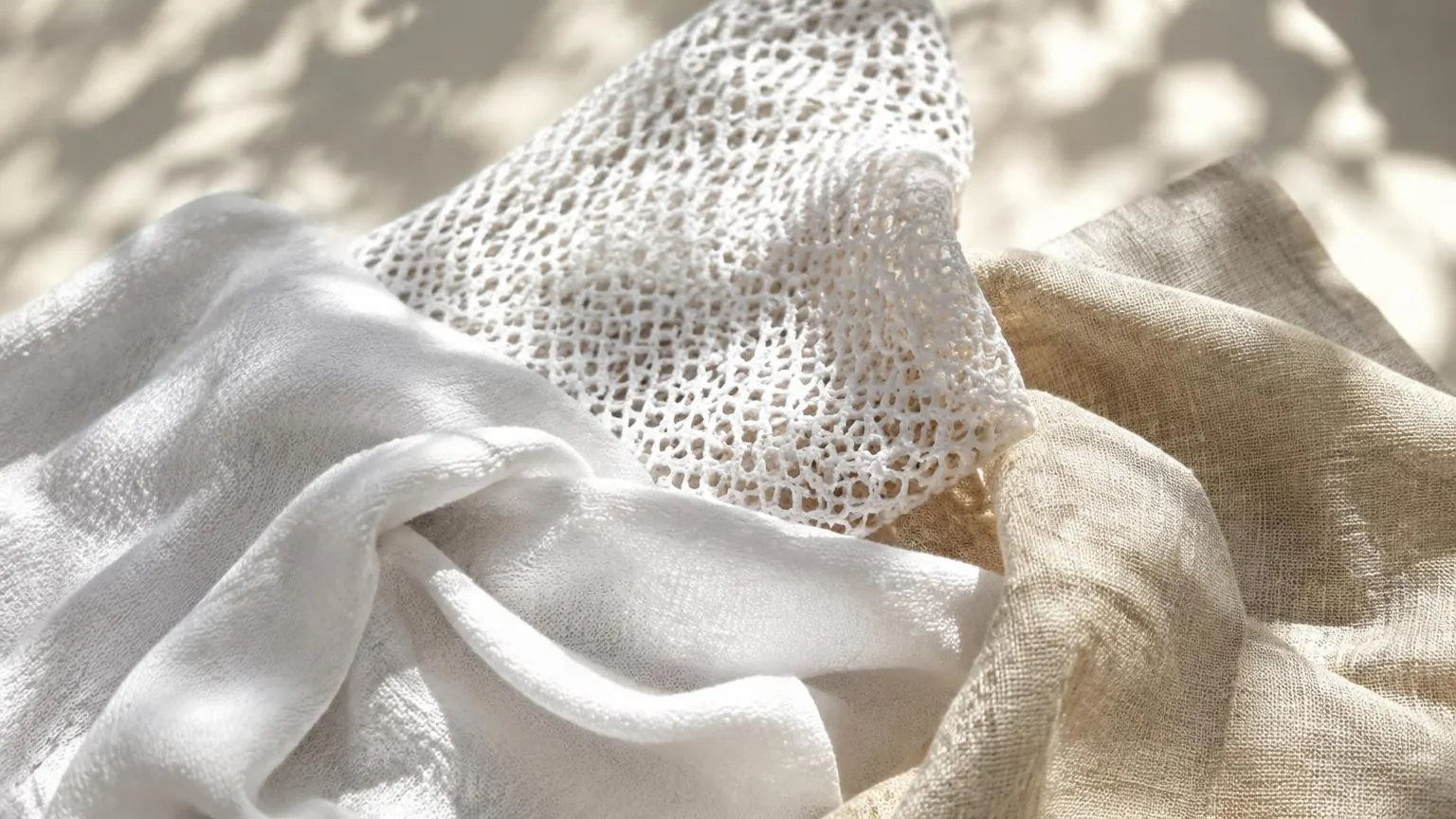
How a garment feels in heat depends on more than its fiber. Knit or weave, weight, lining, padding and fit all change how well it lets heat escape, handles sweat and dries.
6 guides in this section
Fabrics & Care
Learn to separate breathability, absorbency, drying time and wicking, then check mesh, lining, padding and fit without relying on cooling claims.
2 min read
Fabrics & Care
Compare mesh, unlined, spacer and sports bra features for sweaty days, with practical checks for lining, support and comfort rather than product rankings.
2 min read
Fiber is only part of it
A label lists fiber content, but two garments with the same fiber can feel very different. Look at all six.
Labels often use these loosely. They describe different things, and one fabric can do well on one and poorly on another. Cotton, for example, absorbs a lot of moisture but can be slow to dry.
Cotton is a fiber and padding is a construction, so a bra can be both. See cotton and padded bras.
Care workflow
There's no single temperature or method that suits every garment. This order of steps works whatever the label says.
1
The wash-tub number is a maximum temperature, bars underneath mean a gentler cycle, and a crossed-out symbol means don't. Drying instructions are separate from washing ones.
2
Group by colour, by hand-wash versus machine, and by delicacy. Every item in a load must allow the cycle and temperature you choose.
3
Fasten bra hooks. A mesh bag can help with small machine-washable items; it doesn't make a hand-wash-only item machine-safe.
4
Measure detergent as its pack directs. Use the label's temperature or lower, not a habit.
5
Line, flat, drip or shade drying are different instructions. Only tumble dry when the label allows it, at the setting shown.
6
Elastic that no longer springs back, wires working loose or straps that won't hold are signs to repair or replace.
Symbol meanings follow GINETEX; bra care follows Breast Cancer Now, which says hand washing is best and machine washing or tumble drying may affect shape over time. Full detail: how to wash and dry underwear.
Fabrics & Care
Choose summer bra features around work, commuting, exercise and lounging, with practical trade-offs for humid and dry days and links to fabric guidance.
· 3 min read
Fabrics & Care
Practical drying and changing habits for sweat under the breasts, what powders and barrier balms can do, and when a rash needs professional advice.
· 2 min read
Fabrics & Care
Choose an everyday summer bra by fit, fabric and construction. Compare unlined, padded, wired and wireless styles without rankings or cooling promises.
· 3 min read
Fabrics & Care
Compare cotton, lawn, voile, linen and synthetic fabrics for hot, humid days, with practical checks for weight, lining, fit and care.
· 3 min read