How to Judge Bra Breathability in Hot Weather
Learn to separate breathability, absorbency, drying time and wicking, then check mesh, lining, padding and fit without relying on cooling claims.
By US Hosiery EditorialPublished Updated 2 min read
The short answer
Airflow, absorbency, drying and moisture transport are different properties. Inspect the whole garment, including lining and band, and assess fit separately from fabric claims.
In this guide
The short answer
Check what a breathability claim refers to, then inspect the whole bra: outer fabric, lining, padding and band. Breathability, absorbency, wicking and drying are different properties. None tells you everything about how a garment will feel during your day.
You can narrow your choices by inspection, but you can't measure breathability just by looking through a cup or feeling a cool surface.
Read the claim before the fibre label
| Property | What it means | Useful question |
|---|---|---|
| Breathability | Air or water vapour passing through fabric | Is the claim about one panel or the whole garment? |
| Absorbency | Taking liquid into the material | Does the lining feel wet once saturated? |
| Wicking | Moving liquid through or along fabric | Where is that moisture meant to go? |
| Drying time | How long moisture takes to leave | Is there test information, or only a description? |
Cotton is absorbent and can feel damp when saturated. Many synthetic knits absorb less water and often dry faster, but knit, thickness and finish matter too. Neither ‘natural’ nor ‘synthetic’ settles the choice.
If a description says only ‘cooling’, look for an explanation: an open panel, a particular lining or a named test. If test results are supplied, check what was tested and under what conditions. A result for a fabric sample isn't a direct account of wearing the finished bra.
For a wider comparison of fibres used next to skin, see underwear fabrics compared.
Inspect from the inside out
- Lining: read any separate composition information and feel the surface against your skin.
- Cup: check whether foam or inserts sit behind the outer fabric. Compare thickness, not just names such as ‘spacer’.
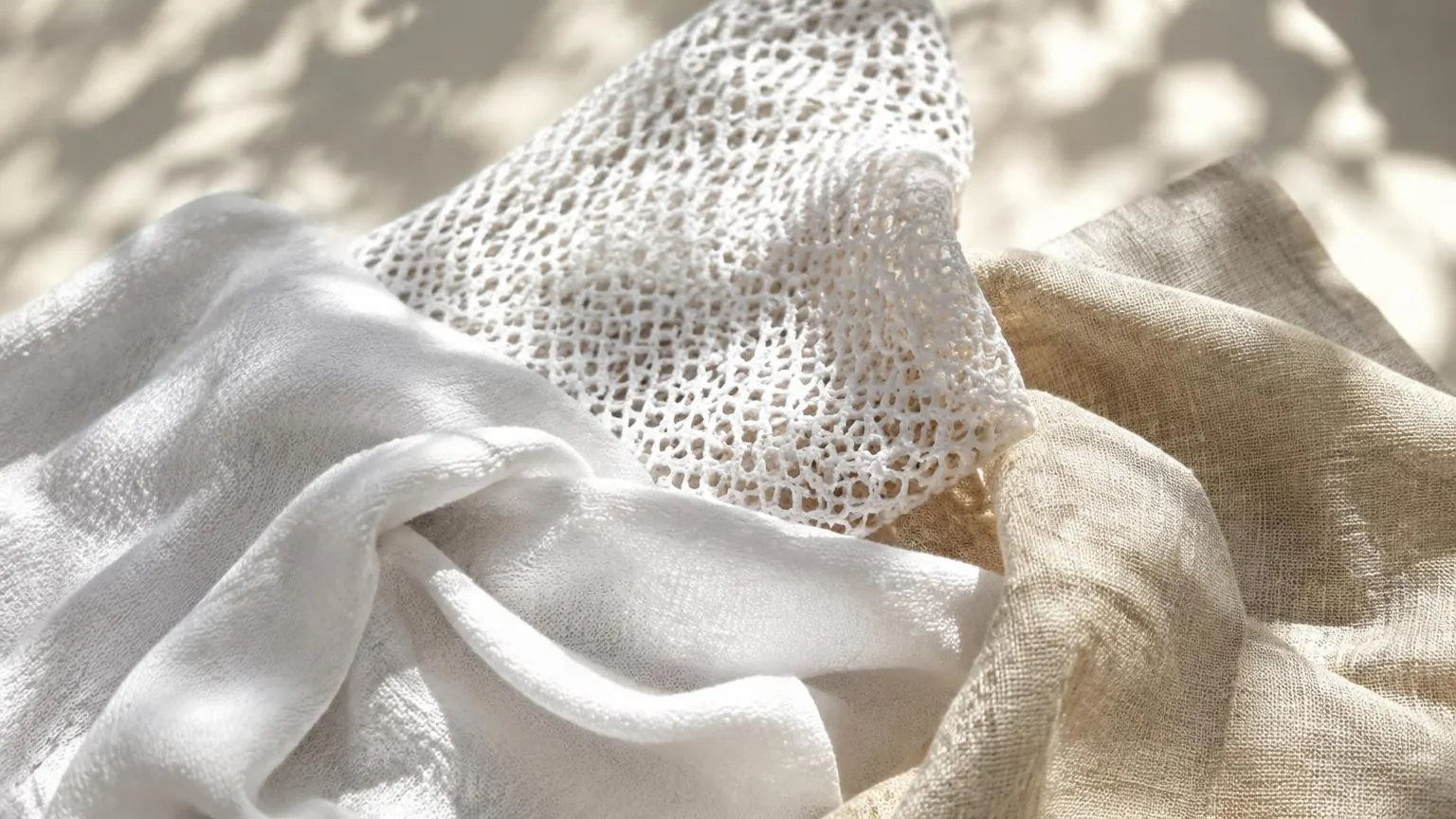
- Mesh: turn it over. An open outer panel may have dense backing.
- Band and wings: inspect the area where you actually notice dampness. A mesh upper back won't change the fabric beneath your breasts.
- Seams and edges: feel them, then check them during movement.
Layer count alone won't predict comfort. An unpadded cup may still have a lining, while padded cups vary in thickness and construction. The cotton and padded bra comparison explains those labels.
Keep marketing separate from evidence
‘Bamboo’ textiles are usually rayon or viscose. The FTC has challenged unsupported claims that rayon made from bamboo retains bamboo's natural antimicrobial properties (FTC). Don't choose a bra for irritated skin on the strength of that word.
Similarly, an open-looking fabric is a clue about construction, not a drying-time result. Use it to decide what to inspect next.
Compare during ordinary wear
For bras you already own, note where dampness appears and which surface feels uncomfortable. Compare on similar days where possible: a desk day and a workout ask different things of a garment. These notes help with your next choice; they aren't a laboratory test.
Keep fit in the comparison. Breast Cancer Now recommends a level band, cups that contain the breasts without gaps or bulging, and straps that don't dig (Breast Cancer Now). A damp band alone doesn't tell you that it is too tight.
If the fit is comfortable, change one construction detail next time. The bra feature guide sets out options. For briefs and other underwear in the same conditions, see choosing underwear for hot, humid weather.
Sources and further reading
External pages referenced in this guide. Brand fitting guides describe that brand's own sizing; check each brand's chart.
- Your guide to a well-fitting bra (Breast Cancer Now, PDF) (breastcancernow.org)
- FTC Charges Companies with ‘Bamboo-zling’ Consumers (ftc.gov)
Report an outdated detail or broken link
Found something out of date, or a source link that no longer works? Let us know. We read every report and fix errors as described in our corrections policy.
Keep reading