Underwear Fabrics Compared: Fibre, Feel and Care
Compare cotton jersey, modal, lyocell, viscose, nylon and polyester underwear, including stretch blends, gusset linings and what labels tell you.
By US Hosiery EditorialPublished 4 min read
The short answer
Choose underwear by fibre, construction and fit together. Absorbency, drying, softness and stretch recovery are different properties, and a blend label only tells part of the story.
In this guide
Two pairs can have the same fibre label and feel quite different. One may be thin and flexible; the other dense, brushed or lined. Start with the material, then check what has been made from it.
The short answer
Cotton and regenerated-cellulose fibres such as viscose are absorbent. Nylon and polyester generally absorb less moisture and dry more readily. Elastane adds stretch recovery. None of those facts alone tells you which pair will feel coolest: knit, weight, finish and fit matter too (University of Georgia Extension).
Choose for your day. A soft everyday pair, a pair for sustained activity and one you can wash while travelling needn't be identical.
Separate the properties
These words answer different questions:
- Breathability: how readily air and water vapour pass through the fabric. Air permeability and vapour transfer aren't identical measurements.
- Absorbency: how much moisture the material takes up.
- Moisture transport, or wicking: how liquid moves along or through the fabric.
- Drying: how readily that moisture leaves the garment.
- Softness: how the surface feels against you.
- Stretch recovery: how well fabric returns after stretching, not just how far it stretches.
An absorbent fabric can stay damp once wet. A low-absorbency fabric isn't automatically moisture-wicking. Don't read one property as shorthand for all the others.
Compare the main fibres
The table gives broad tendencies, not results from testing particular underwear. The absorbency, synthetic-fibre drying and abrasion-resistance distinctions follow University of Georgia Extension. The modal, lyocell and elastane notes are general descriptions of how these fibres are used, not test results.
| Material | Feel and moisture handling | Stretch and durability | What to check |
|---|---|---|---|
| Cotton | Often soft; absorbent, but can remain damp after soaking | Fibre itself has poor elasticity; knit or a stretch blend changes the feel | Shrinkage instructions, thickness and shape after washing |
| Modal | Regenerated cellulose; often chosen for a soft, draping feel; absorbent | Softness is not a durability rating; the knit and any stretch fibre affect how it wears | Care label, fabric weight and added stretch fibre |
| Lyocell | Regenerated cellulose; often smooth and absorbent | Finished knit and blend affect shape retention | Wash and drying instructions; don't assume it can take any cycle |
| Viscose/rayon | Absorbent, often fluid and soft | Drape isn't the same as elastic recovery | Gentle-care requirements and whether the garment loses shape |
| Polyamide/nylon | Often smooth; lower absorbency than cellulosic fibres and generally quicker drying | Synthetic fibres can add abrasion resistance | Knit openness, lining and finish; nylon alone doesn't establish wicking |
| Polyester | Low absorbency and generally quick drying; feel varies with yarn and finish | Useful where abrasion resistance and easy care matter | Whether moisture transport is actually specified |
| Elastane/spandex blends | Moisture behaviour depends largely on the other fibres and construction | Elastic fibre contributes recovery and a close fit | How firmly it stretches and whether it returns without sagging |
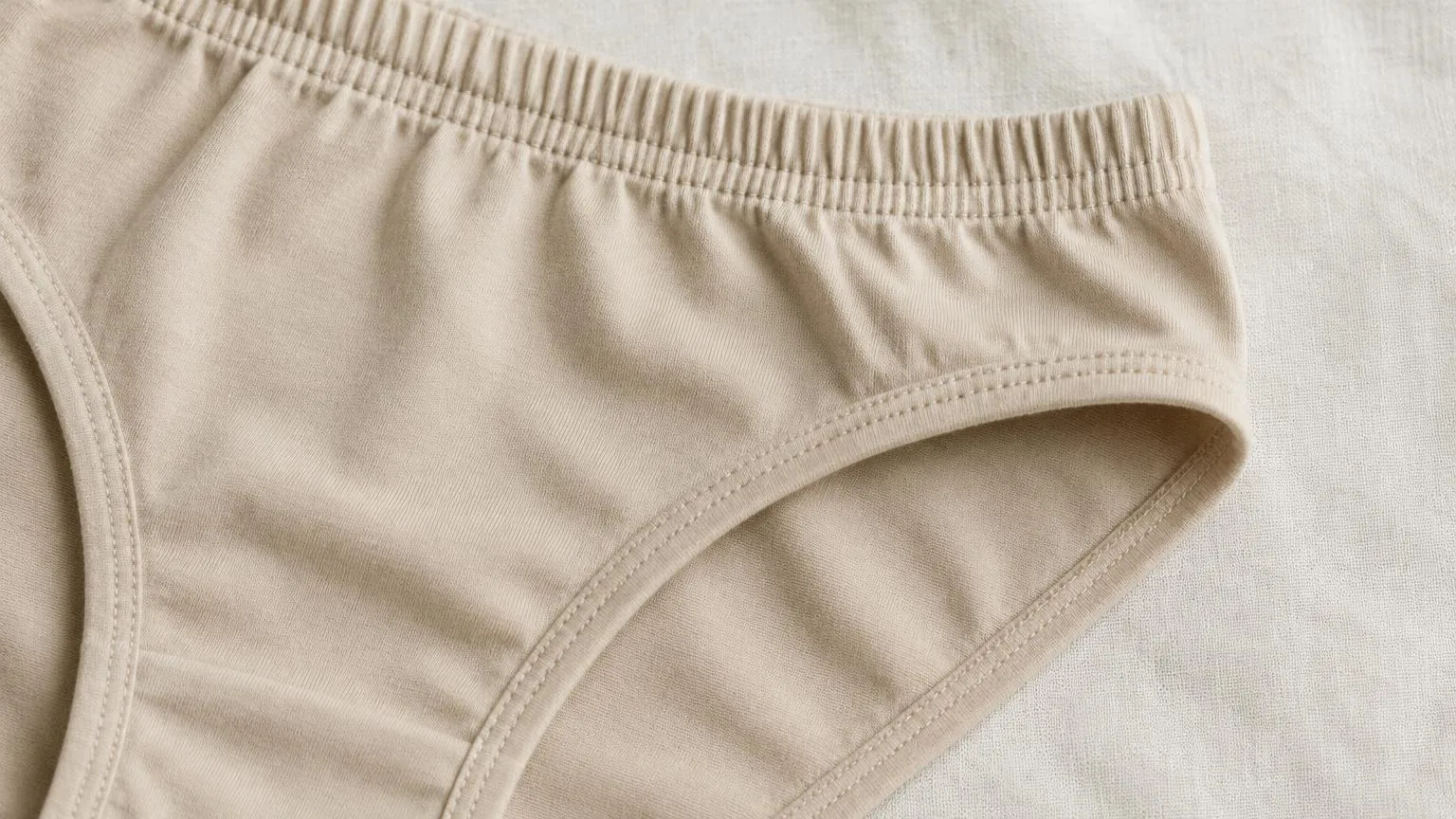
Softness isn't a durability rating. Feel the inside seams and waistband as well as the main panel. A smooth body fabric doesn't make a rough leg binding comfortable.
Cotton jersey and microfibre aren't extra fibre types
Cotton jersey means cotton made into a jersey knit. Knitting forms connected loops; jersey has widthwise stretch from its construction. That doesn't make pure cotton behave like an elastane blend when released (Pratt Institute Textile Research Lab). If you like T-shirt-like underwear, look for jersey, then read the fibre composition separately.
Microfibre describes very fine fibres used to make the fabric, not a separate chemical fibre identity. It's a yarn/fabric description, not a substitute for “polyester” or “polyamide” on the composition label. It also doesn't tell you whether the finished fabric is open, dense or moisture-wicking.
What US fibre names actually mean
The FTC Textile Rule defines rayon as regenerated cellulose and expressly permits lyocell for a specified solvent-produced cellulose fibre. It defines nylon as a synthetic polyamide and spandex by its segmented-polyurethane composition (16 CFR 303.7, read through Cornell LII).
Modal is also a regenerated-cellulose fibre, but the rule's rayon paragraph doesn't name it. Instead, the rule adopts the international generic names in ISO 2076:2013 by reference, alongside its own list (16 CFR 303.7). That's why you'll see “modal” on labels even though it isn't in the US lettered list.
You'll see spandex on US labels and elastane on many others for the same kind of stretch fibre. The US rule defines spandex as at least 85% segmented polyurethane (16 CFR 303.7); elastane is the name used in much of the rest of the world.
“Bamboo” underwear is usually viscose/rayon made using bamboo as the plant source, not fabric made directly from bamboo fibre (FTC guidance). The FTC says rayon and viscose are the same thing for this labelling guidance, and distinguishes “rayon made from bamboo” from actual bamboo fibre (FTC).
Read the percentages and the gusset separately
US fibre disclosures give generic fibre names and percentages by weight, not by surface area (FTC Textile Fiber Rule summary). In a cotton–elastane blend, cotton is therefore not necessarily the only material touching your skin.
Percentages help you compare composition. They don't tell you fabric weight, yarn fineness, stretch direction, waistband tension or how well a pair will recover. More elastane isn't automatically more comfortable. Stretch the fabric gently, release it and check how it settles; repeat that assessment after laundering.
The gusset lining is the inside panel at the crotch. Its fibre can differ from the outer body so the maker can combine a particular skin-facing feel or absorbency with a different outer fabric. For example, a cotton lining and a nylon-blend body serve different construction choices. Check for separate “body” and “gusset” compositions; a cotton gusset doesn't mean the whole pair is cotton. Don't infer a medical benefit from the lining.
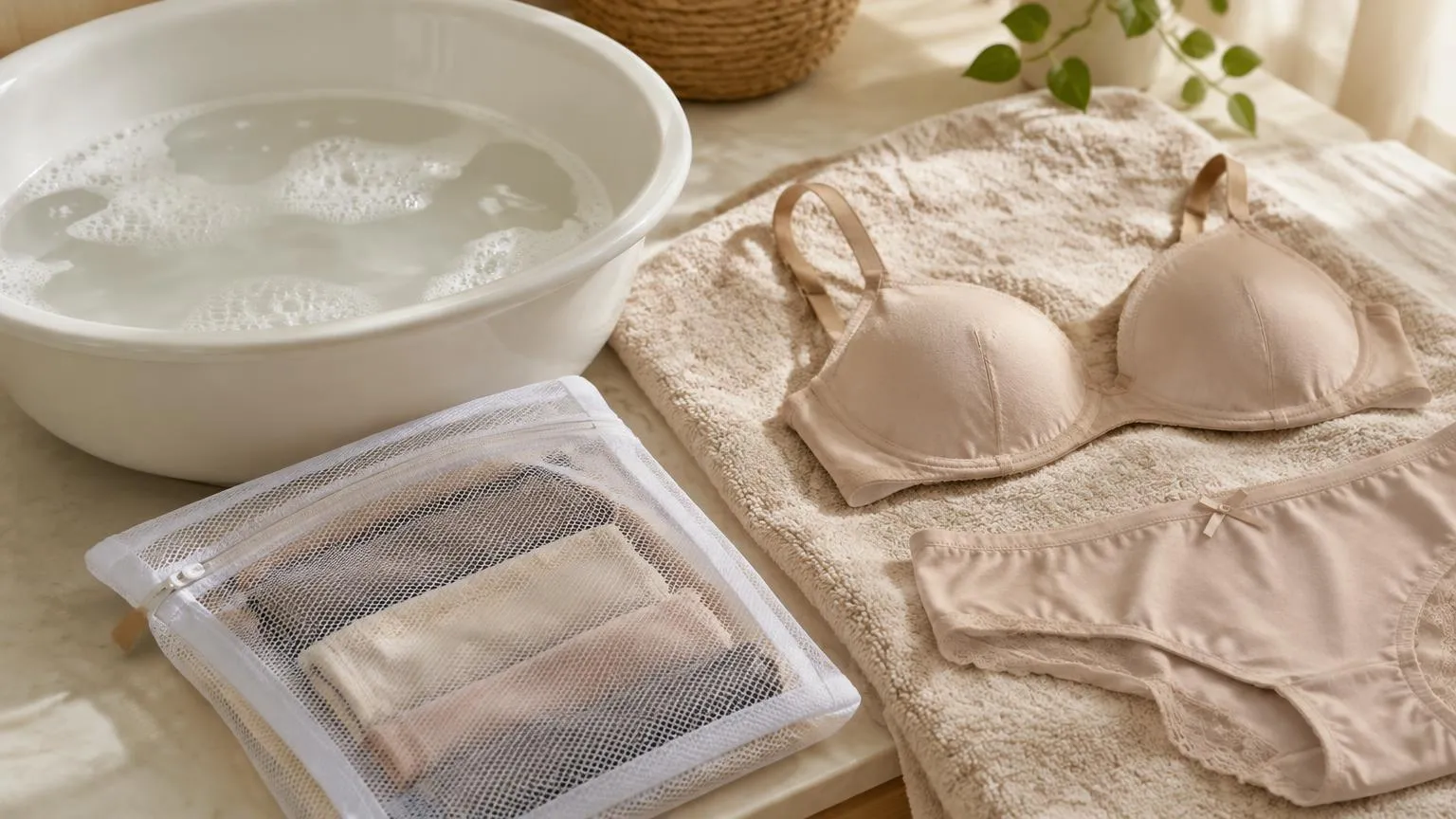
For choosing among actual pairs, use the movement checks in how underwear should fit. For sweaty days and travel, see hot and humid weather; before changing wash settings, check washing and drying underwear.
Sources and further reading
External pages referenced in this guide. Brand fitting guides describe that brand's own sizing; check each brand's chart.
- Fiber Types — University of Georgia Extension (site.extension.uga.edu)
- 16 CFR 303.7 — Generic names and definitions for manufactured fibers (Cornell LII) (law.cornell.edu)
- How to avoid bamboozling your customers — Federal Trade Commission (ftc.gov)
- Bamboo Textiles — Federal Trade Commission (ftc.gov)
- Textile Fiber Rule — Federal Trade Commission (ftc.gov)
- Knits — Pratt Institute Textile Research Lab (textileresearchlab.pratt.edu)
Report an outdated detail or broken link
Found something out of date, or a source link that no longer works? Let us know. We read every report and fix errors as described in our corrections policy.
Keep reading