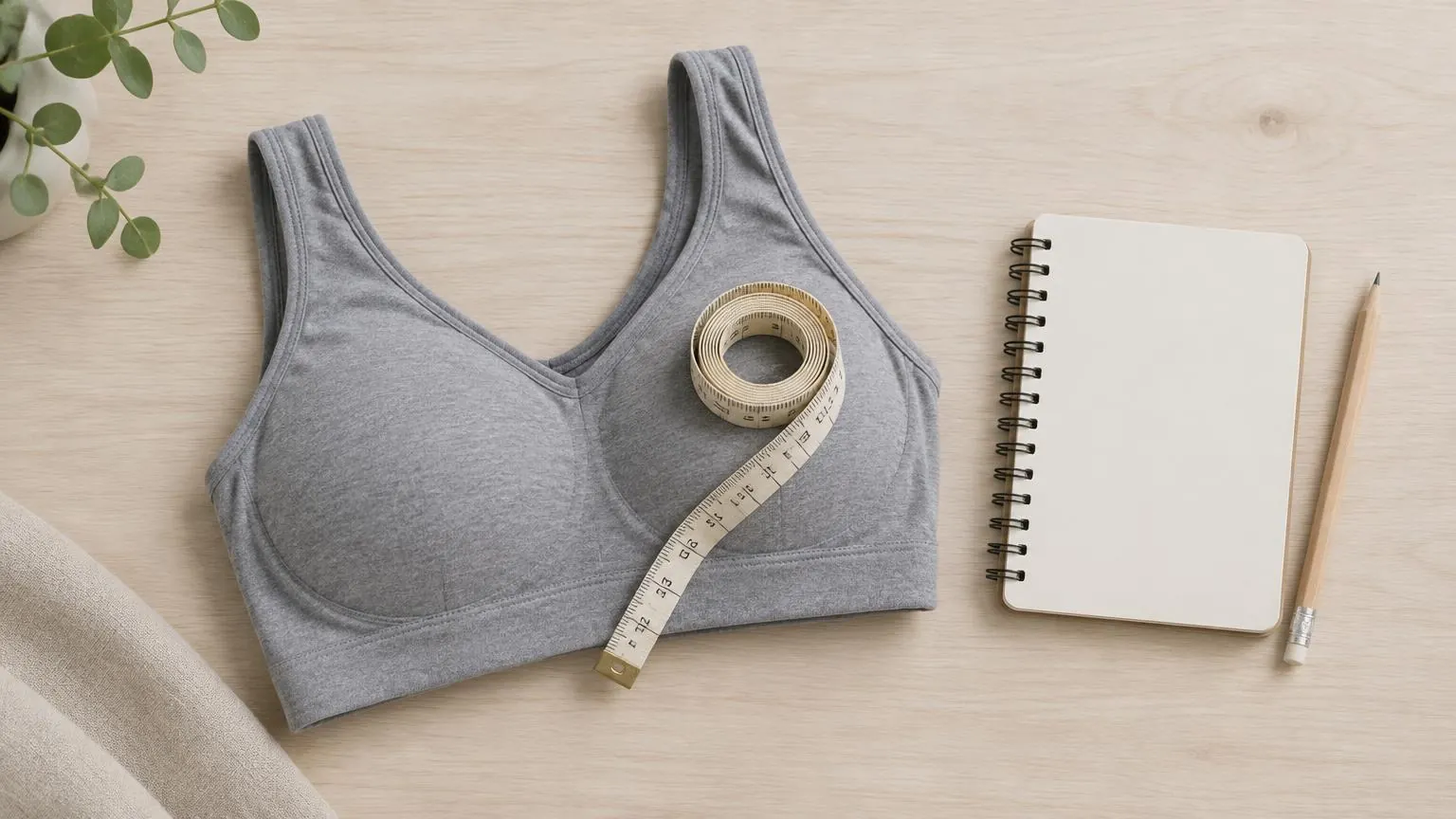
Why Your Bra Feels Uncomfortable: Fit Points to Check
Work through band fit, cup volume, wire placement, straps and garment details without assuming discomfort is always a sizing problem.
By US Hosiery EditorialPublished Updated 3 min read
The short answer
Check the band, cups, wires and straps one at a time. Compare cup volume separately from cup shape, and do not treat persistent pain or a rash as something a size change will necessarily resolve.
In this guide
If your bra becomes uncomfortable during the day, note when it starts and exactly where you feel it. Does every bra bother you, or just one? Is it the whole band, one edge or a damaged detail? Those comparisons help you decide whether to adjust, try another style or stop wearing that garment.
The short answer
Discomfort can point to fit, a garment detail that bothers you, or a bra that no longer fits as it once did. Start with a quick fit check, then inspect the exact contact point. A well-fitting bra should be firm without discomfort, contain your breasts and have straps that neither dig nor slip (University of Portsmouth / OpenLearn). Persistent pain or a rash needs medical advice, not repeated size experiments.
First, separate fit from a garment detail
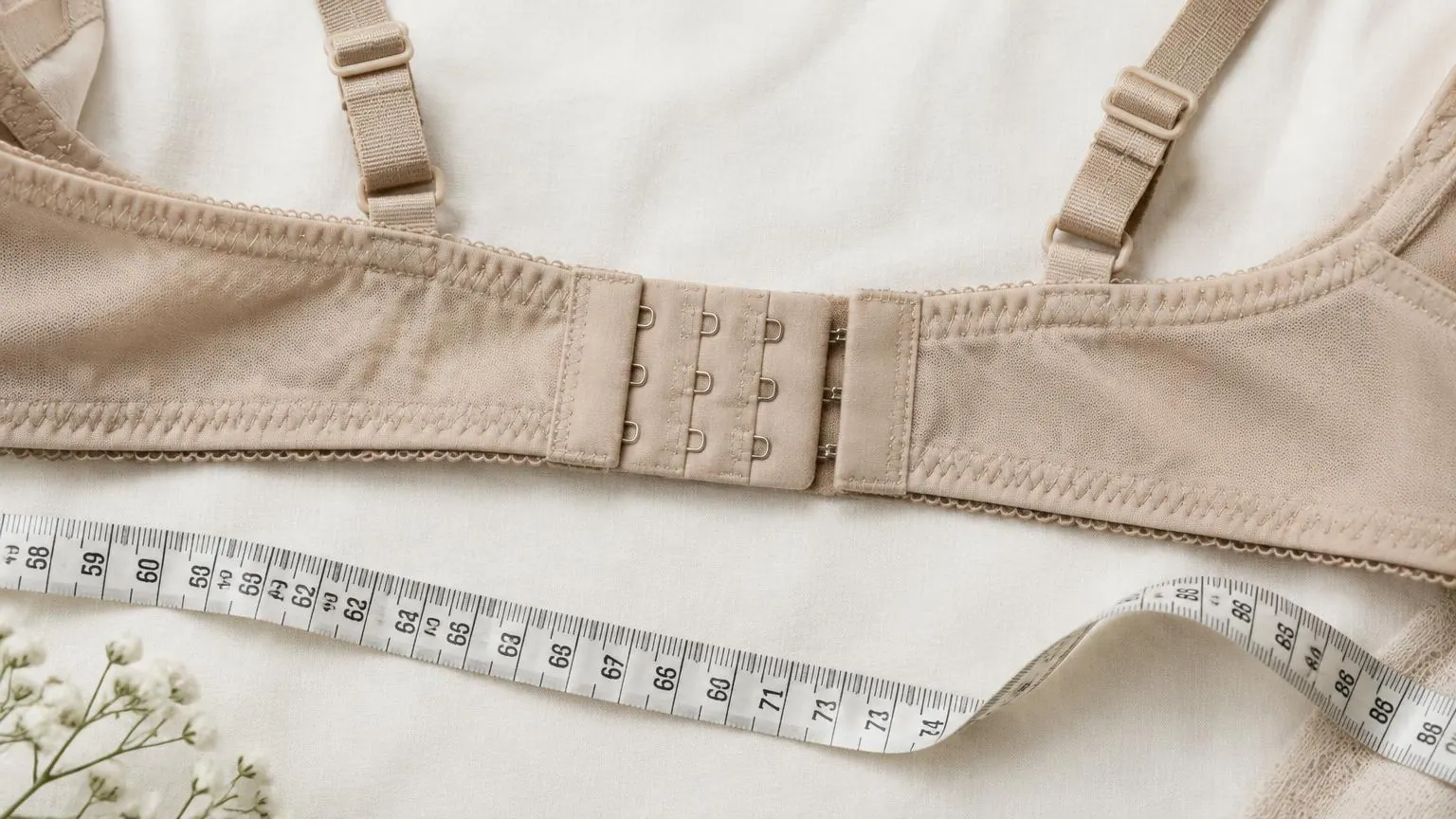
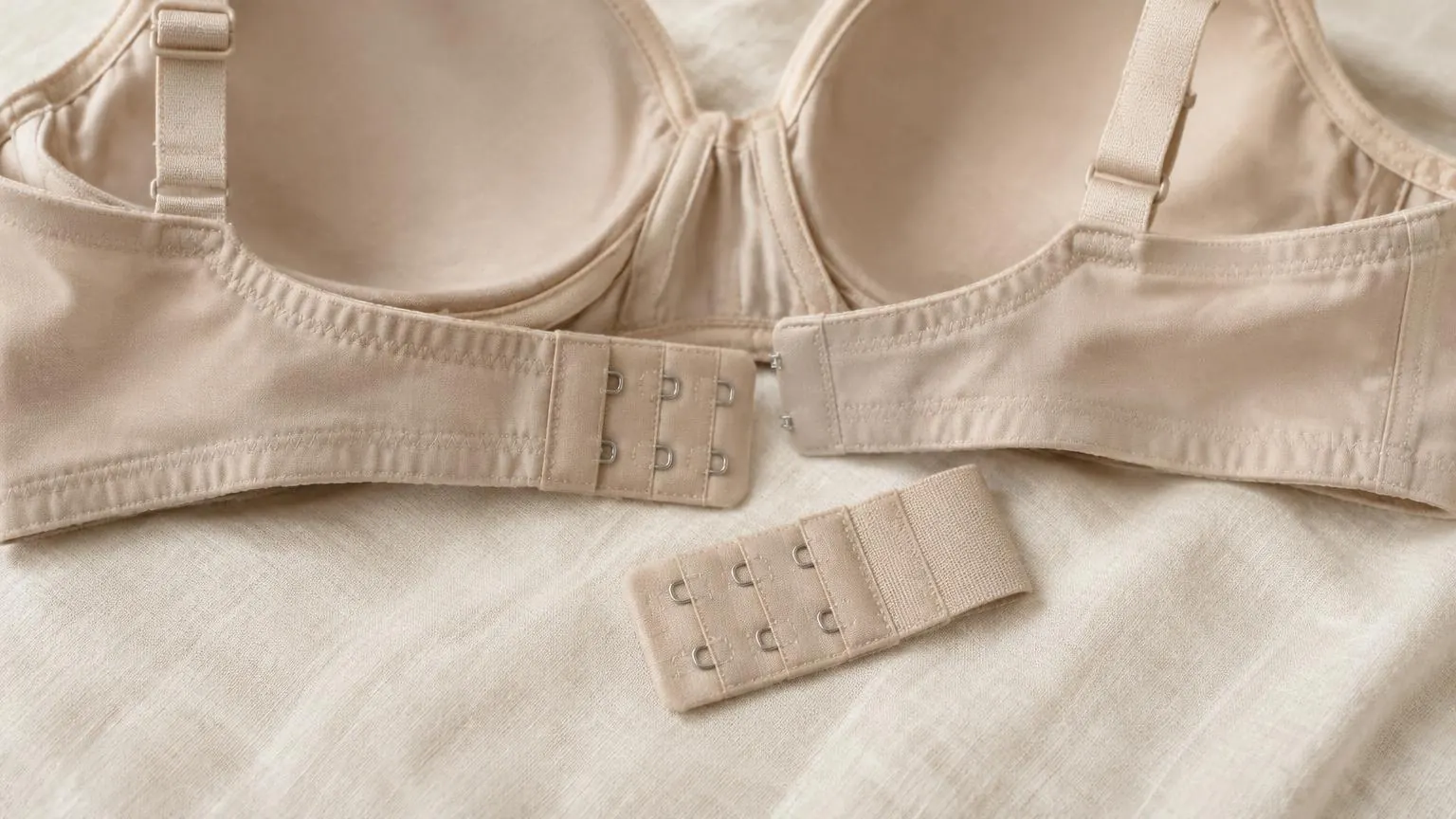
Put the bra on with your breasts settled into the cups. For a new bra, use the loosest hooks, and check that the band sits level front and back (Breast Cancer Now).
Then use the quick whole-bra check. If the band moves, the cups overflow or the straps dig, start there. If those checks look right but one small area bothers you, inspect that part of the garment before changing size.
Match the next step to the pattern
These comparisons are ways to narrow down what to try, not a diagnosis.
| Pattern you notice | What to compare next |
|---|---|
| Only one bra bothers you | Inspect its seams, edges, fastening and wire casing; compare a different garment |
| It was comfortable before but now shifts | Recheck its current fit, hook setting and condition |
| A cup gaps in one place but presses in another | Compare another cut before assuming the whole cup is too large |
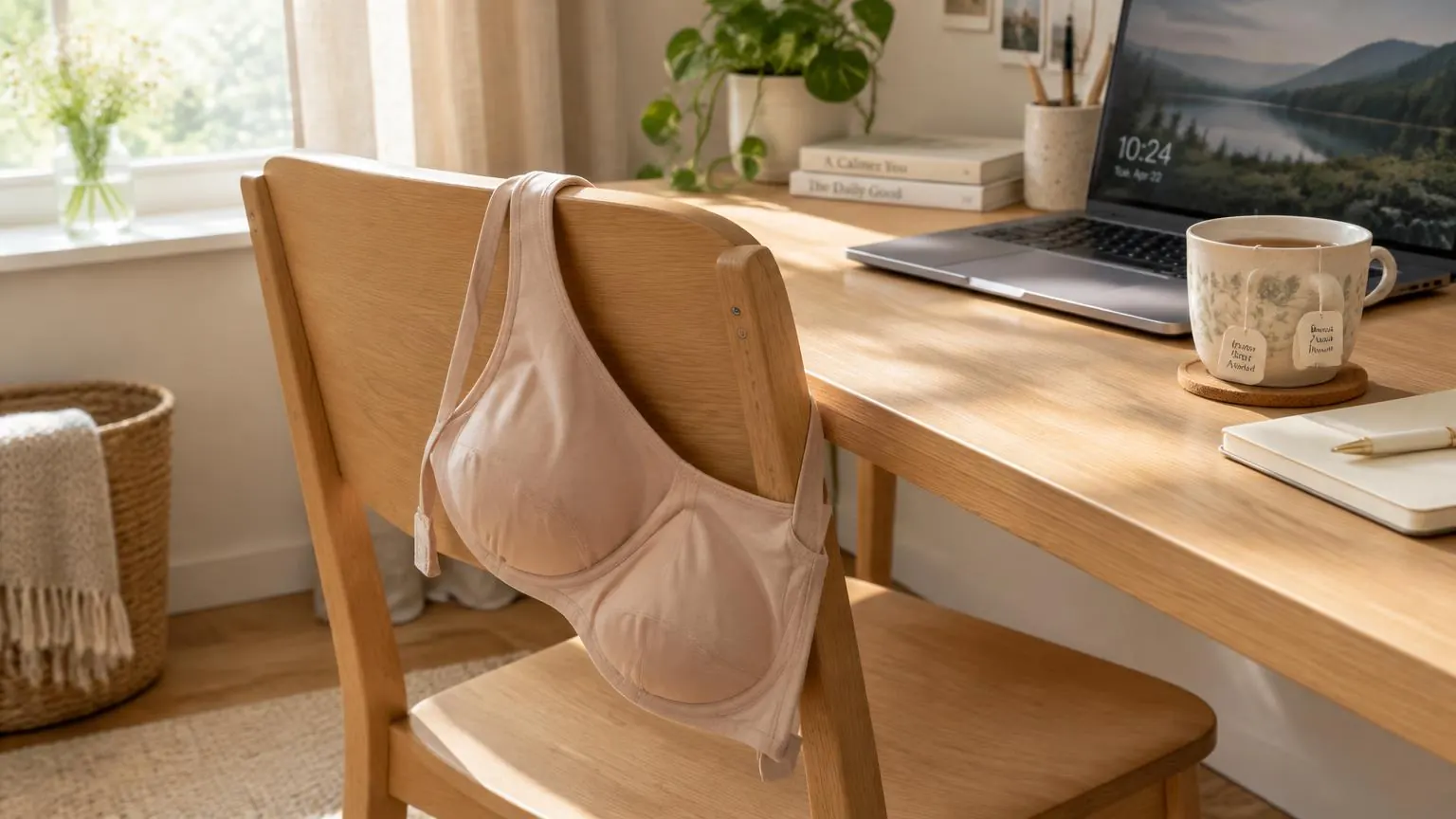
| It feels fine standing but presses at your desk | Compare the same contact point standing and seated |
| You notice irritation or pain even without the bra | Stop the try-on checks and seek medical advice |
If you need to change size, a label combines a band number and a cup letter. Our size and shape guide explains how to separate band fit, cup volume and cup shape, with UK sister-size examples. Changing the band alone can change cup room too.
If the problem appears only at your desk, use the seated fit guide. There's no need to repeat the whole sizing process before checking which edge presses.
Inspect the part that touches the sore spot
Take the bra off and look at the corresponding area inside it. Check for a folded label, raised seam, stiff cup edge, rough hook or damaged wire casing. Don't keep wearing a bra with an exposed wire.
Compare one detail at a time. For example:
- If a lace edge bothers you, compare a smoother edge in a similar cut.
- If a wire tip is the contact point, compare another wire outline or a wireless style. Still check the band and cups.
- If the fastening rubs, inspect the hooks and the fabric covering them before buying a different size.
A smoother style and a larger size are different changes. Choose the one that matches what you found; neither needs to become a rule for every bra you wear.
Check whether the bra has changed
Look at the wires, strap adjustment and whether the band still stays level. Breast Cancer Now advises checking wires and strap stretch, following the care label and replacing a bra when it no longer fits (Breast Cancer Now).
If a tighter hook restores a comfortable, level fit, compare it while moving and sitting. If it doesn't, don't keep shortening the straps to compensate. For washing, drying and signs of wear, see our underwear and bra care guide.
Keep skin symptoms separate
A rash beneath the breast can't tell you which size to buy. Breast Cancer Now advises seeing a doctor because other conditions can resemble intertrigo. Its guidance also recommends drying the skin beneath the breasts thoroughly (Breast Cancer Now). Don't assume a particular fibre or a different cup letter will resolve a rash.
When to stop adjusting and seek help
Speak to a doctor if breast pain does not improve. Seek urgent medical advice for a red, hot or swollen breast, a hard lump that does not move, nipple discharge or a change in breast shape (NHS).
Persistent pain or numbness should not be managed through repeated fit experiments alone.
Do not assume chest pain is the band. Call your local emergency number for sudden chest pain or pressure that does not go away, pain spreading to your arm, neck, jaw, stomach or back, or chest pain with sweating, nausea, light-headedness or breathlessness (NHS).
Sources and further reading
External pages referenced in this guide. Brand fitting guides describe that brand's own sizing; check each brand's chart.
- Your guide to a well-fitting bra (Breast Cancer Now, PDF) (breastcancernow.org)
- Getting the right fit: five-point bra fit guide (University of Portsmouth, via OpenLearn) (open.edu)
- Intertrigo (rash under the breast) (Breast Cancer Now) (breastcancernow.org)
- Breast pain (NHS) (nhs.uk)
- Chest pain (NHS) (nhs.uk)
Report an outdated detail or broken link
Found something out of date, or a source link that no longer works? Let us know. We read every report and fix errors as described in our corrections policy.
Keep reading