Why Does My Bra Hurt When I Sit? Fit Points to Check
A bra that feels fine standing can press or dig when you sit. Check the band, wire, centre, cups and straps in order, and know when pain isn't about fit.
By US Hosiery EditorialPublished Updated 5 min read
The short answer
If a bra only hurts when you sit, work through the fit points in order: band, underwire, centre front, cups, then straps. Change one thing at a time. Pain that continues when you're not wearing a bra needs medical advice, not just more fit checks.
In this guide
A bra can feel comfortable while you stand, then press at the band or wire when you sit at a desk or lean forward. Start by finding the exact contact point. You don't need to change every part of the fit at once.
The short answer
If your bra hurts when you sit, check where it presses, then compare that spot standing and seated. Work through band, underwire, centre front, cups and straps, changing one thing at a time. These are try-on checks, not an explanation for all seated pain. If pain continues without the bra, or doesn't improve, seek medical advice.
Check each fit point
Put the bra on the way Breast Cancer Now suggests: lean forward so your breasts settle into the cups, fasten it on the loosest hooks and make sure the band sits level at the front and back (Breast Cancer Now). Then sit down and check each point.
Band
The University of Portsmouth's five-point guide describes a band that sits firmly and doesn't slide as you move, but isn't so tight that it's uncomfortable, affects your breathing or makes flesh bulge at the edges (OpenLearn / University of Portsmouth).
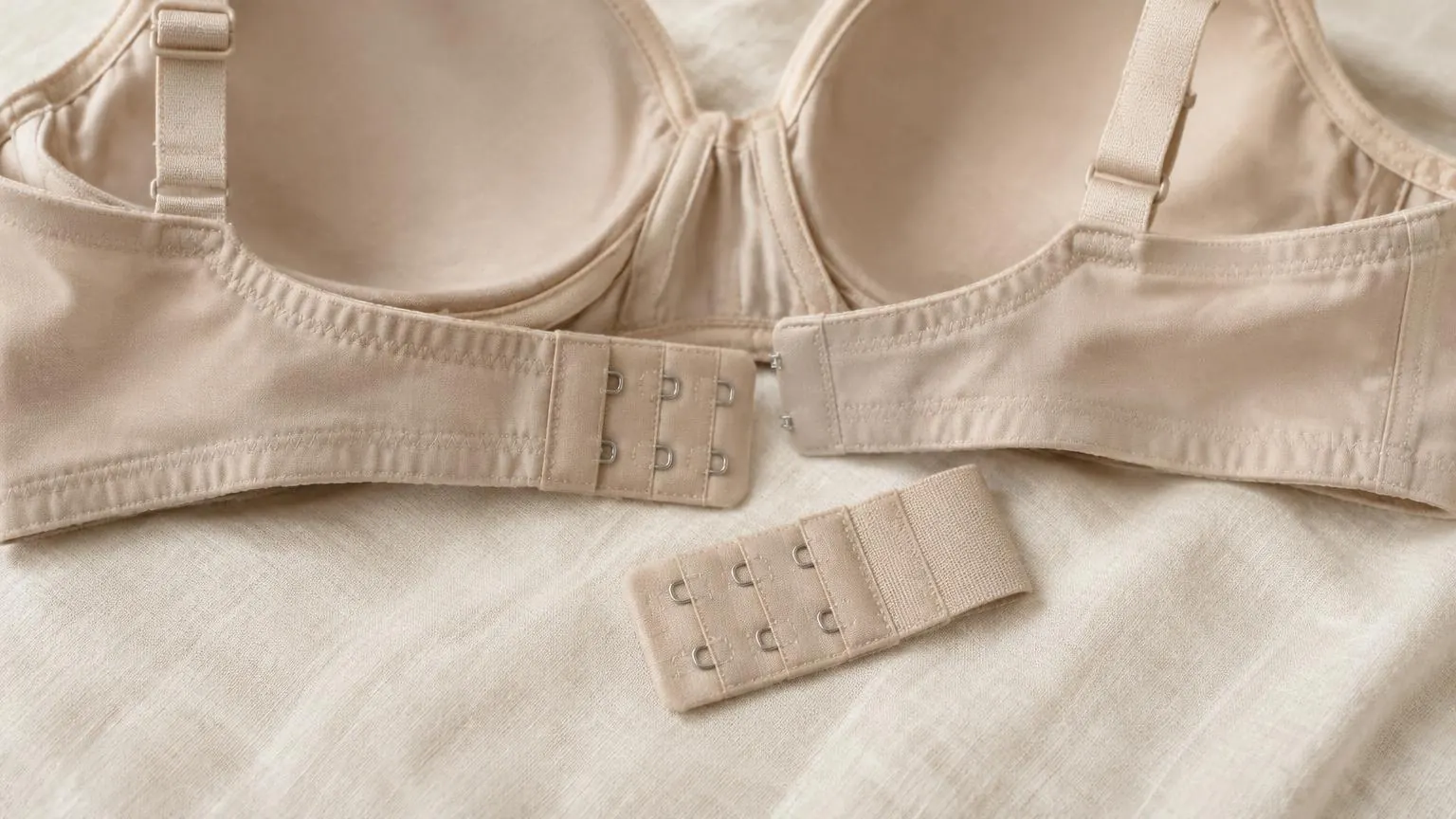
If the band feels fine standing but you want to undo it as soon as you sit, it may be too small for you in that style. A bra extender lets you try a little more length, but it also moves the hooks and changes how the band sits, so treat it as a test rather than proof of your size.
Underwire
In a wired bra, the wire should follow the natural crease under your breast and not rest on breast tissue (OpenLearn / University of Portsmouth). It should lie flat against your chest without digging in or gaping (Breast Cancer Now). If the wire sits on tissue under your arm or at the front, the cups are often too small. A wire that sits in the right place but still digs may not suit your shape, so a different style or a wireless bra may be more comfortable.
Centre front
The part between the cups should sit flat on your chest. If it lifts away, you may need a larger cup (OpenLearn / University of Portsmouth). Check the centre where there is wired structure to sit against your chest; don't expect fabric above a low plunge to do the same job. With a soft wireless centre, focus on comfortable containment and whether the bra stays in place.
Cups
Your breasts should fill the cups with no loose fabric and no bulging over the top, bottom or sides (Breast Cancer Now). Puckered fabric can mean the cup is too big (OpenLearn / University of Portsmouth). Cups that are too small can push the wire onto breast tissue, so check them together with the wire. Most people have one breast larger than the other, so fit the cups to the larger side.
Straps
Straps should sit close without digging in or slipping, and add support without carrying the whole weight of your breasts (Breast Cancer Now). If you have to tighten them hard to feel supported, recheck the band before you shorten the straps again.
Fabric and skin
Seams, labels, scratchy lace and sweat under the band can irritate skin even when the fit is right. A red rash in the fold under the breast may be intertrigo, a skin condition caused by skin rubbing on skin and made worse by heat and moisture (Cleveland Clinic). That's a question for a pharmacist or doctor, not a fit problem.
Choose what to compare next
If the band alone presses, compare a different band fit. If the cups overflow or the wire rests on breast tissue, check cup room before loosening the band. A gap in one part of the cup alongside pressure elsewhere is a reason to compare another cut.
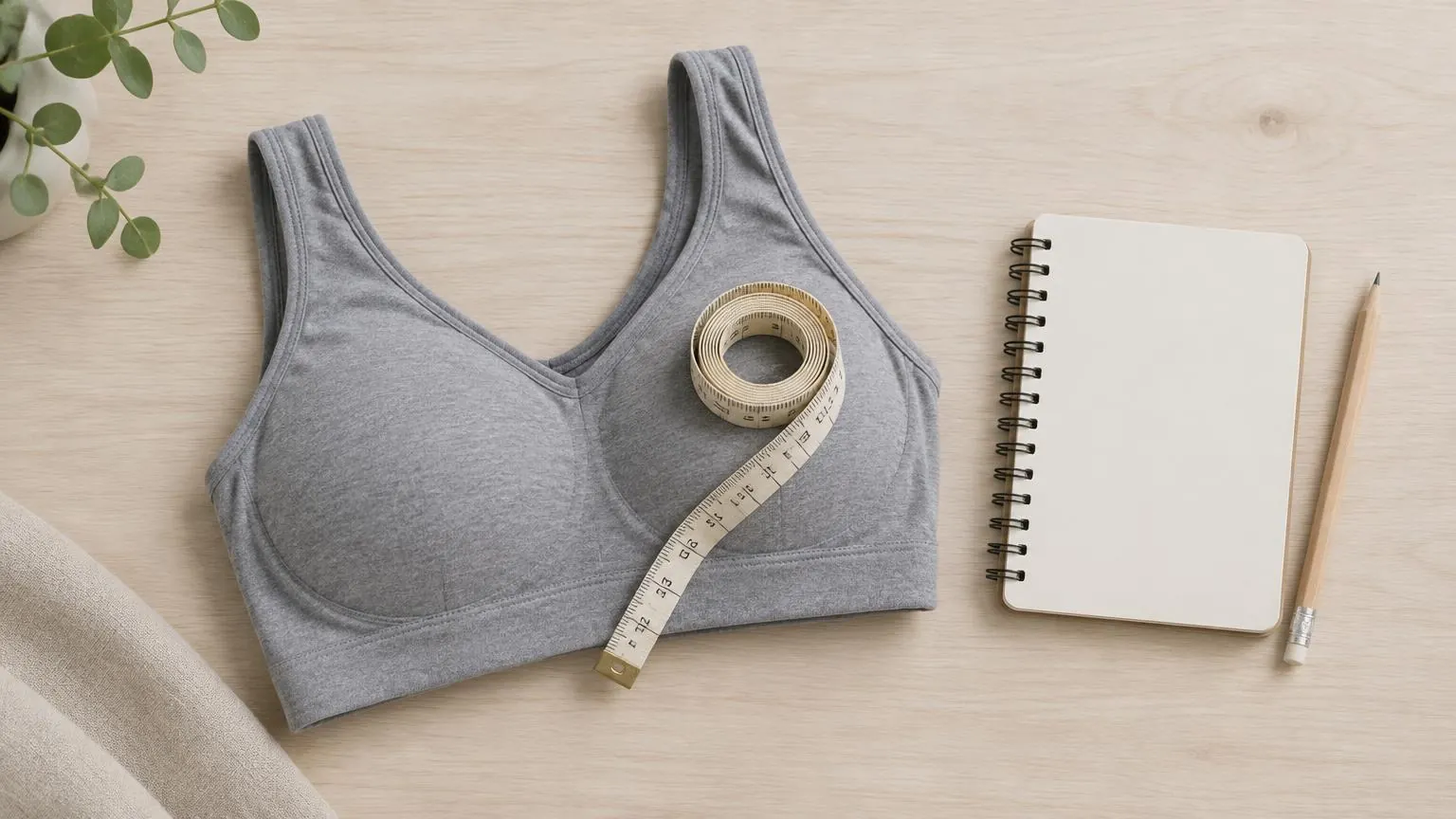
A bra label combines a band number and a cup letter; changing the band can change cup volume too. Our size and shape guide explains the UK examples and sister sizes, so you can choose a comparison without changing more than you meant to.
For fastening adjustments and extenders, use the band guide. If the discomfort happens throughout the day, not just sitting, work through other garment details as well.
Troubleshooting table
The fit checks in this table come from the Breast Cancer Now and University of Portsmouth guides cited above. The suggestions are things to try, not a diagnosis.
| What you notice when sitting | Fit point to check | What to try |
|---|---|---|
| Band presses into your ribs | Band may be too small | Compare a looser band using the size guide above, or another style |
| Wire digs under your arm or at the front | Wire resting on breast tissue | Compare more cup room or a different wire shape |
| Centre lifts off your chest | Check cup room and wired centre placement | Compare more cup room |
| Straps dig into your shoulders | Straps too tight, or band too loose | Loosen the straps, then check the band is firm and level |
| Cups gape or pucker | Cup too big, or wrong shape | Smaller cup letter, or a different cup shape |
| Itching or a rash under the band | Heat, sweat, friction or fabric | Smoother fabric. Ask a pharmacist about a rash |
When it isn't the bra
Breast pain is common and is usually linked to periods. Injuries or strains in the neck, shoulder or back can also be felt as breast pain. The NHS suggests a properly fitted bra by day and a soft bra at night. It advises seeing a GP if pain doesn't improve, and getting urgent advice if part of the breast is red, hot or swollen, you find a hard lump, or you notice nipple discharge or a change in shape (NHS).
If the pain continues when you're not wearing a bra, or you have numbness or tingling, speak to a doctor rather than trying more bras.
Don't assume chest pain is your bra. Call your local emergency number if you have sudden chest pain or pressure that doesn't go away, pain that spreads to your arm, neck, jaw, stomach or back, or chest pain with sweating, nausea, light-headedness or breathlessness (NHS).
Compare the options while seated
Try the same chair and the same reach in each bra. Compare a wireless style if the wire is the contact point, or a shorter band edge if a longline section folds or presses. Neither option replaces checking the band and cups.
Before keeping a replacement, sit as you normally would for a few minutes. Notice whether you need to tug it down or undo it. Stop the comparison if it hurts; you don't need to sit through pain to decide a garment isn't comfortable.
Sources and further reading
External pages referenced in this guide. Brand fitting guides describe that brand's own sizing; check each brand's chart.
- Your guide to a well-fitting bra (Breast Cancer Now, PDF) (breastcancernow.org)
- Getting the right fit: five-point bra fit guide (University of Portsmouth, via OpenLearn) (open.edu)
- Intertrigo (Cleveland Clinic) (my.clevelandclinic.org)
- Breast pain (NHS) (nhs.uk)
- Chest pain (NHS) (nhs.uk)
Report an outdated detail or broken link
Found something out of date, or a source link that no longer works? Let us know. We read every report and fix errors as described in our corrections policy.
Keep reading