
Types of Bras Explained: 25 Bra Types and When to Wear Them
The only guide you need — every bra style explained with exactly when to wear each one, which outfits they suit, and the mistakes to avoid.
There are dozens of different types of bras on the market — and picking the wrong one for the wrong outfit is one of the most common wardrobe mistakes women make. The right type of bra can transform your silhouette, improve your posture, maximise comfort, and make any outfit look intentional.
This complete guide breaks down all 25 bra types — what each one is, how it works, what it does for your shape, and exactly which outfits and occasions call for it. Whether you’re building a wardrobe from scratch or simply trying to find the right bra for a specific dress, this is the reference you’ve been looking for.
Everyday Bra Types (1–6)
These are the workhorses of your bra wardrobe — types of bras designed for daily wear, versatile enough to work under most everyday outfits, and comfortable enough to wear from morning to evening.
The most popular type of bra in the world. Smooth, seamless, moulded cups with no seams or lace that would show through fitted tops. Usually lightly padded to create a round, natural silhouette. Available in underwired and wireless versions. If you own only one bra, it should be this one.
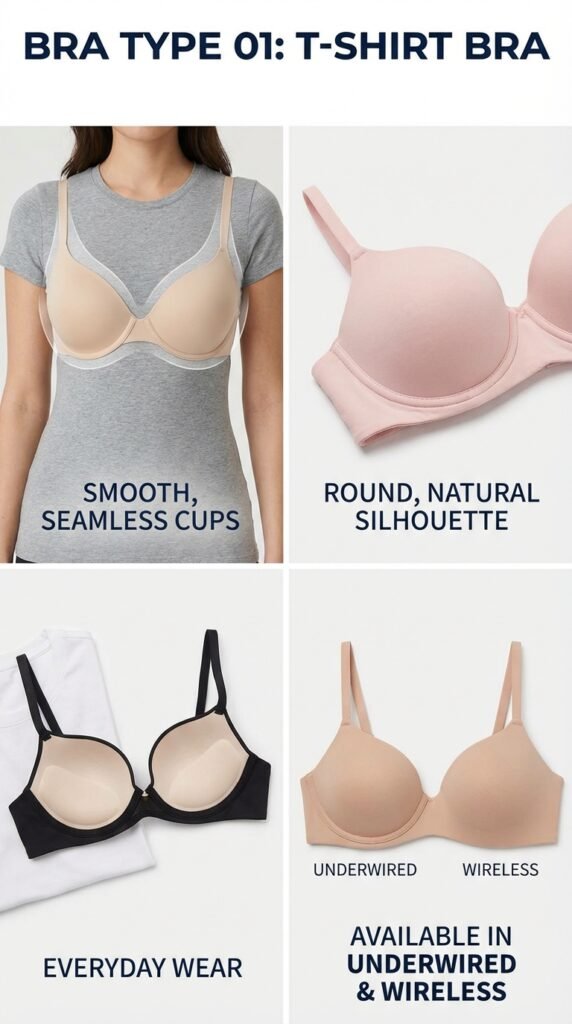
A bra without an underwire that relies on stretch fabric, band tension, and cup shaping for support. Modern wireless bras offer surprising lift and a smooth line under clothing. Ideal for smaller to medium cup sizes seeking comfort without sacrificing shape.
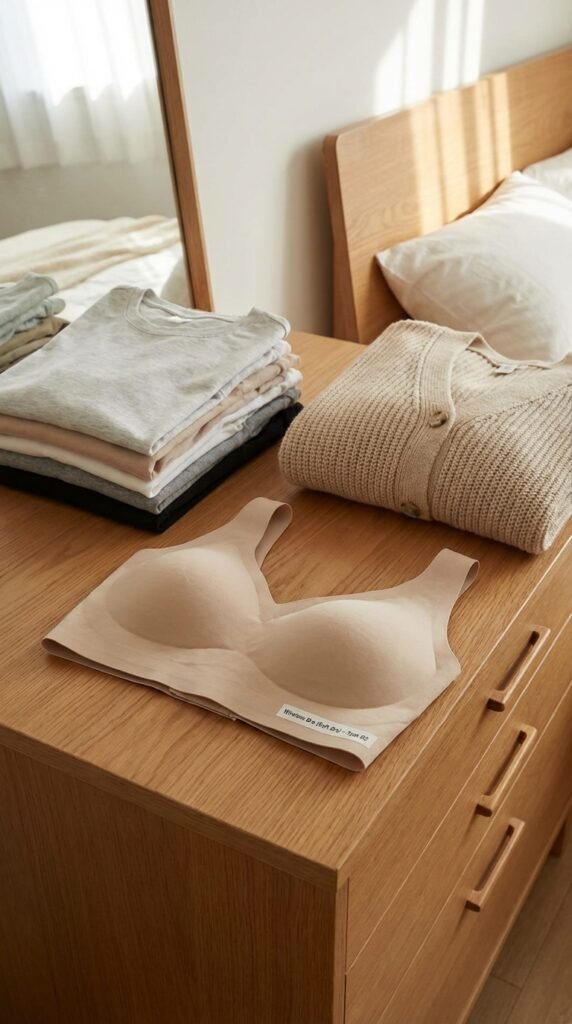
Cups that cover the entire breast with extra fabric at the top and sides. Wider straps, a reinforced band, and often full-cup underwire make this the most supportive everyday bra style. Essential for D-cup and above, and for anyone who wants complete coverage under work attire.
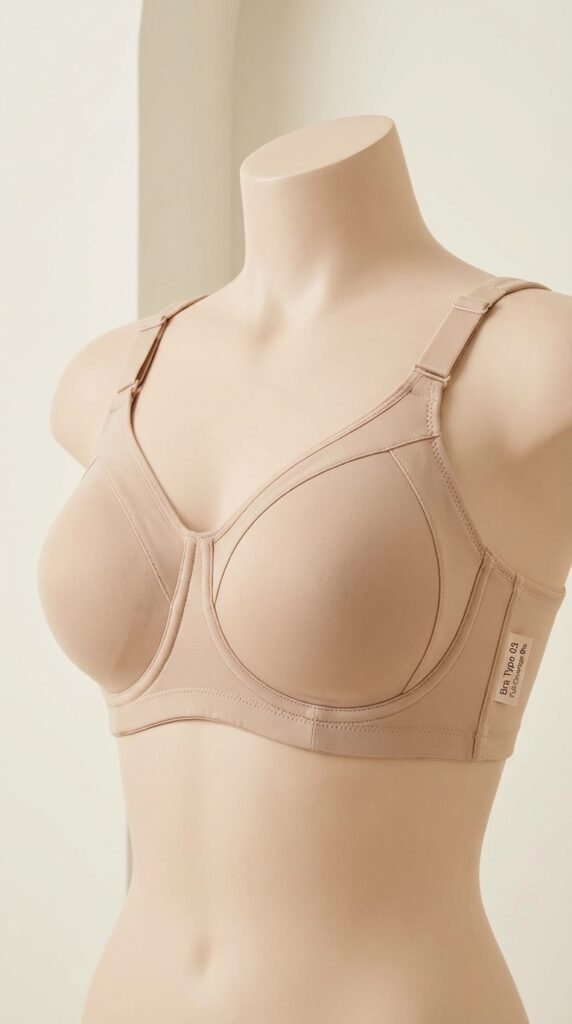
An underwired bra with unpadded, unlined cups — just fabric and underwire. Shows the natural breast shape, including nipple contour. Breathable and lightweight, making it ideal in warm weather. Often features beautiful lace or mesh and doubles as lingerie. One of the best breathable bras for summer.
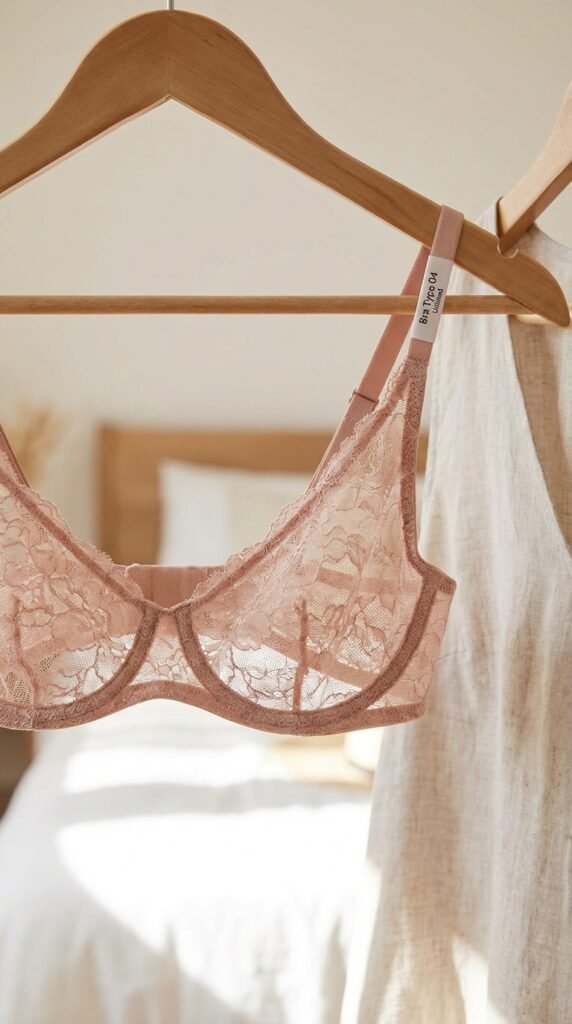
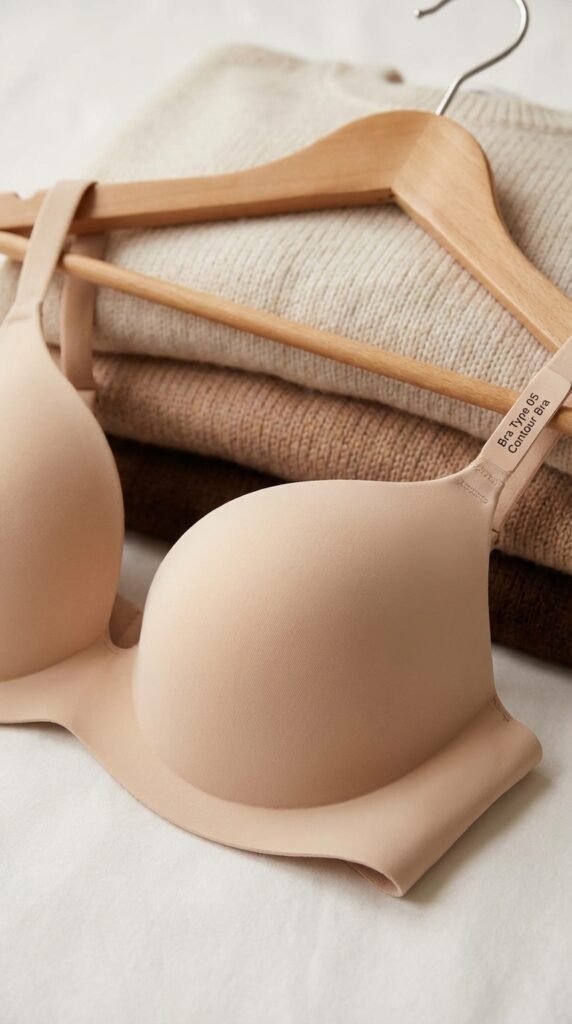
Pre-shaped, lightly padded cups that maintain their shape whether worn or empty. Unlike a push-up, a contour bra adds shape rather than volume. The cups hold their form on the rack, giving them a structured silhouette under fitted knitwear and shirts.
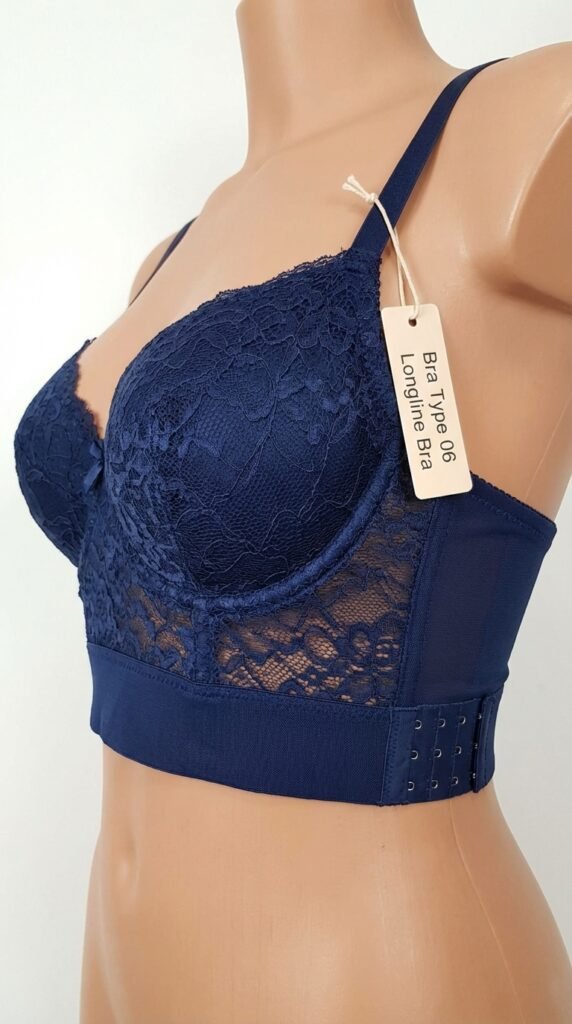
A bra with an extended band that drops below the standard bra line — usually 3–6 inches longer than a regular band. The extra band width distributes weight more evenly, reducing strain on the shoulders. Popular for larger cup sizes and as a fashion piece visible above high-waisted trousers.
Shape & Lift Bra Types (7–12)
These types of bras are engineered to enhance, lift, or reshape your silhouette — creating cleavage, uplift, or a more defined profile under specific outfits.
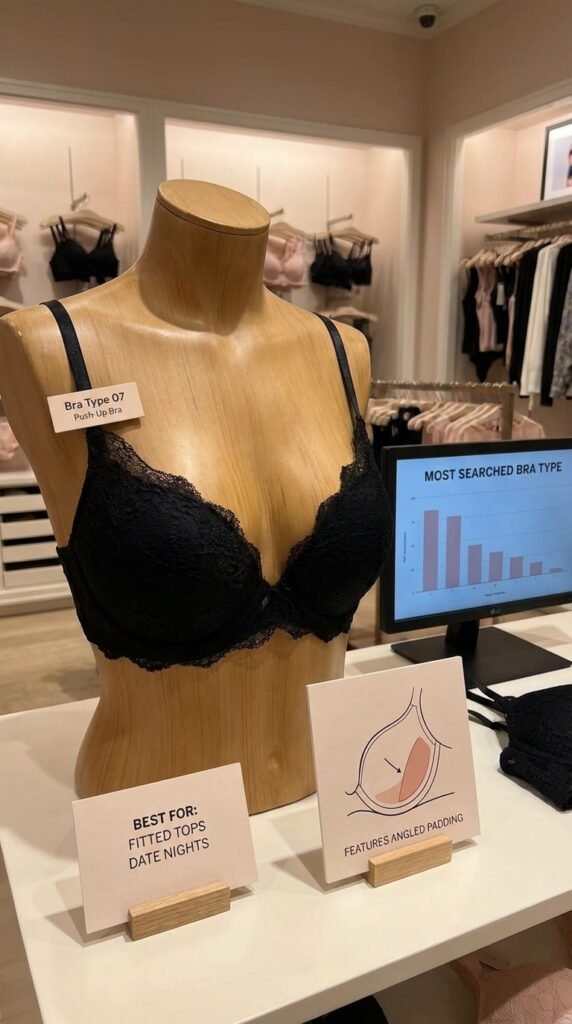
Features angled padding at the base and sides of each cup to push the breasts upward and toward the centre. Creates the appearance of fuller cleavage. Available in levels 1 (natural uplift) through 3 (maximum push). The most searched bra type on the internet.
Wide-set straps, a straight horizontal cut across the cups, and construction that lifts the breasts upward and outward — creating a rounded, theatrical décolletage. Cups cover approximately the lower two-thirds of the breast. A staple for square-neck and wide-neckline outfits.
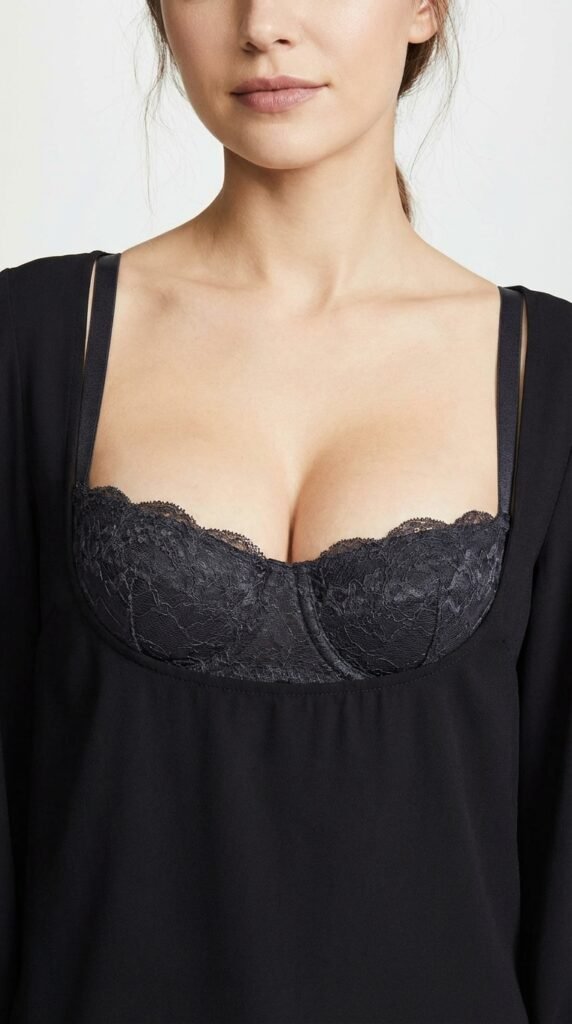
Cups cut to cover 50–60% of the breast, angled to project forward rather than upward. Straps are set closer together than a balconette. Creates a natural cleavage line visible above moderate V-necklines. Sleeker look than a push-up while still offering lift and shape.

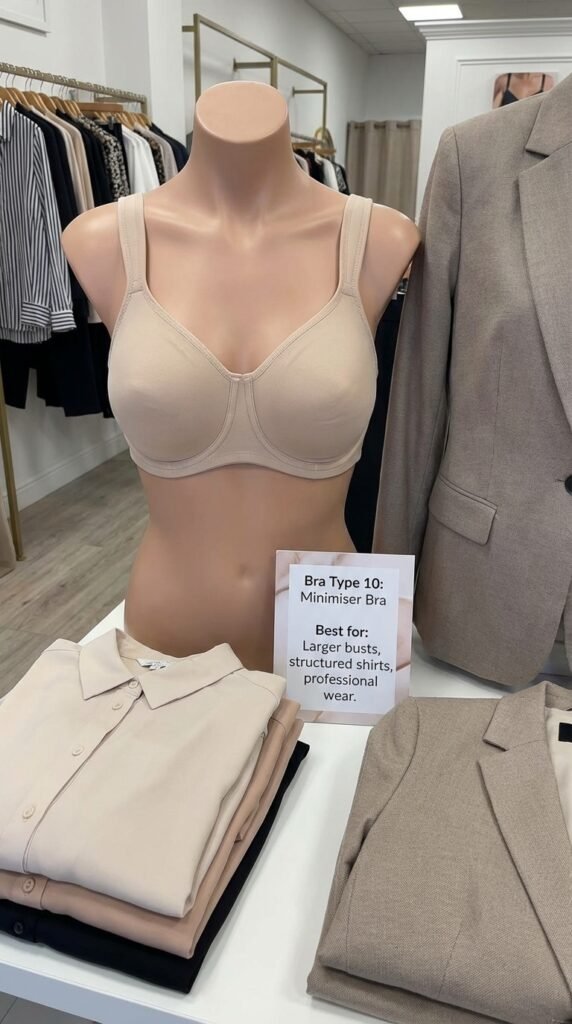
Redistributes breast tissue outward rather than forward, reducing the projected bust measurement by up to an inch. Wider cups and full coverage without adding volume. Makes larger cup sizes easier to fit into structured jackets and dress shirts. No padding, no uplift — pure redistribution.
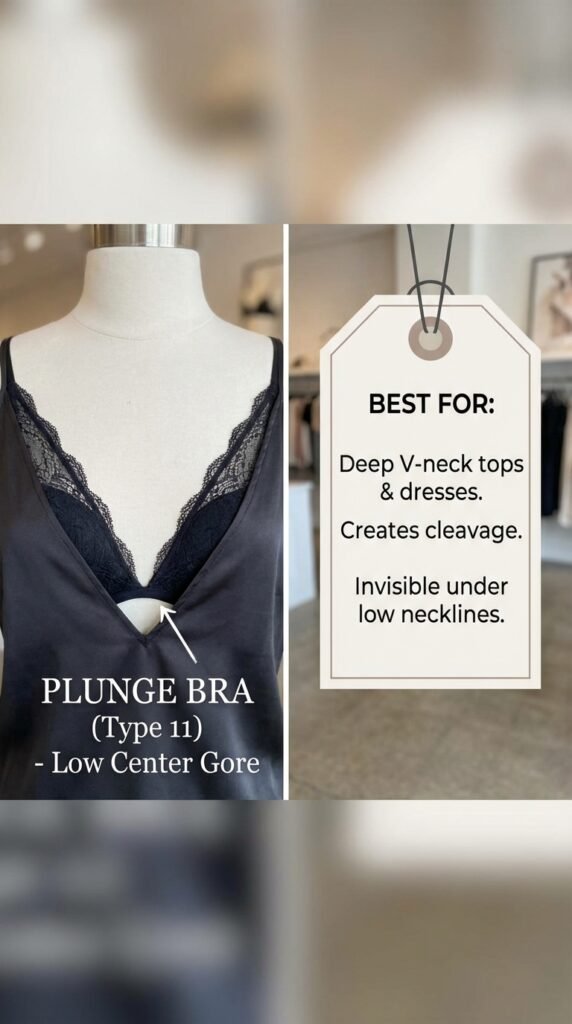
A very low-cut centre gore (the bridge between cups) that sits close to the sternum. Allows a deep V-neckline without the bra being visible. Angled cups push toward the centre to create cleavage. Non-negotiable for any top or dress with a neckline that dips to the sternum or below.
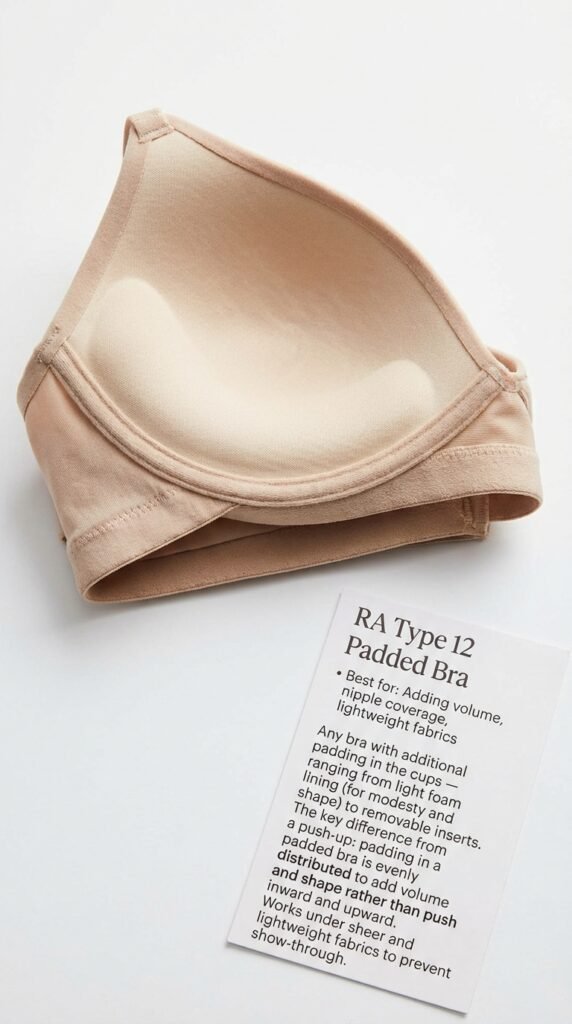
Any bra with additional padding in the cups — ranging from light foam lining (for modesty and shape) to removable inserts. The key difference from a push-up: padding is evenly distributed to add volume and shape rather than push inward and upward. Works under sheer and lightweight fabrics to prevent show-through.
Occasion & Outfit-Specific Bra Types (13–18)
Some types of bras exist precisely to solve the problem of what to wear under a specific outfit. These are the bras to reach for when your standard everyday style just won’t work.
No shoulder straps — all support comes from the band alone. A well-fitted strapless bra should not slide down. Key features include silicone grip strips on the inner band, moulded or structured cups, and a firm-fitting band (often size down from your regular band). Essential for off-shoulder, strapless, and bardot necklines.
Removable, repositionable straps that can be worn in multiple configurations — regular, halter, cross-back, one-shoulder, or strapless. One convertible bra solves multiple outfit challenges. The most versatile type of bra in any wardrobe and an essential travel packing choice.
A bra with a very low-cut or U-shaped back band, often with a clear extension strap that fastens at the waist rather than the mid-back. Solves the challenge of low-back formal wear where a standard band would be visible. Typically best suited to A–C cups where the lower band position still provides adequate support.
Reusable silicone cups that adhere directly to the skin with no straps or band. Available in whole-cup and petal/nipple-cover styles. Best for A–D cups. Provide shape and modesty but minimal lift. Clean, dry skin is essential for adhesion. A must-have for backless wedding dresses and deep-plunge eveningwear.
Straps that tie or clasp behind the neck rather than over the shoulders, with no back strap. Transfers support load to the neck. Best suited to smaller cup sizes — larger cup sizes may find neck strain increases quickly. Perfect under halter-neck dresses and swimsuits where shoulder straps would be visible.
Straps that converge into a Y or T shape at the centre back rather than resting on the outer shoulders. Keeps straps from falling off sloped shoulders and allows full arm mobility during activity. Works under racerback activewear and sports tops. Often combined with sports bra construction for hybrid everyday-active use.
Specialty & Functional Bra Types (19–25)
These bra types are engineered for specific life stages, activities, or body needs. They are not optional for the situations they are designed for — they are essential.
Designed to minimise breast movement during exercise. Available in three impact levels: low-impact (yoga, walking), medium-impact (cycling, hiking), and high-impact (running, HIIT, aerobics). High-impact styles use encapsulation cups for maximum support. Always match your sports bra to your activity level.
Features cups that unhook or fold down on one side to allow breastfeeding without fully removing the bra. Made from soft, breathable, stretch fabric to accommodate breast size changes throughout the day. Wireless styles are recommended in the early postpartum weeks; underwired nursing bras are suitable after supply is established.
Designed with internal pockets to hold a breast prosthesis securely. Wider centre panels, higher sides, and softer fabrics to avoid irritating post-surgical skin. Available in all everyday styles — T-shirt, full-coverage, strapless — so post-mastectomy women have access to the same range of looks as anyone else.
A soft, unstructured bra with no underwire, usually in lace, cotton, or jersey. More fashion-forward than a standard wireless bra — often worn deliberately peeking above low-cut tops or under sheer layers. Minimal support but maximum comfort. Best for naturally supported smaller cup sizes or as a fashion layer. See our teen-friendly bralette guide.
Soft, wireless, no-clasp bra designed specifically for wearing during sleep. Pull-on style with no hard components that would be uncomfortable lying down. Particularly useful during pregnancy when breast tenderness makes overnight support welcome. Made from breathable, stretch cotton or modal fabrics.
A full-coverage bra with a reinforced back panel and criss-cross straps across the upper back that gently pull the shoulders backward and downward, encouraging an upright posture. Often recommended by physiotherapists for women with upper back pain. Does not replace posture exercises but noticeably reduces strain during long seated workdays.
A simple horizontal tube or band of fabric — no wires, no straps, no cups. Provides modesty and minimal shape without any structured support. Best suited to AA–B cups. Frequently worn as a visible layer beneath sheer tops or oversized shirts. Popular in resort wear and as a swimwear cover option. Not intended for all-day support.
Which Type of Bra for Which Outfit?
Use this table as your go-to guide for matching bra type to outfit:
| Outfit / Situation | Best Bra Type | Why It Works |
|---|---|---|
| Fitted T-shirt or blouse | T-shirt bra | Seamless cups — invisible under any top |
| Deep V-neck dress | Plunge bra | Low centre gore stays hidden inside the neckline |
| Strapless dress or tube top | Strapless bra | No straps; silicone grip holds it in place |
| Off-shoulder or bardot top | Strapless or convertible | No visible shoulder straps |
| Low-back gown or dress | Backless bra or stick-on bra | Band sits below the back neckline |
| Square-neck top | Balconette bra | Wide-set straps stay inside square neckline |
| Halter-neck top or dress | Halter bra or convertible | Neck-fastening straps stay out of sight |
| Racerback tank or sports top | Racerback bra | Straps converge to centre — invisible under racerback |
| Gym session, running | High-impact sports bra | Encapsulation cups for maximum motion control |
| Yoga, Pilates, walking | Low/medium-impact sports bra | Compression support for low-movement activity |
| Sheer or lightweight fabric | Padded or contour bra | Prevents show-through; adds body |
| Structured jacket or blazer | Minimiser or full-coverage bra | Reduces projection for a clean line under tailoring |
| Summer heat (35°C+) | Unlined lace or spacer bra | Maximum airflow, prevents under-bust sweat |
| Postpartum / breastfeeding | Nursing bra | Drop-cup clasp allows feeding without removal |
| Casual layering, loungewear | Bralette or wireless bra | Comfort and fashion without structure |
The Essential Bra Wardrobe: How Many Do You Actually Need?
You don’t need all 25 types. A well-curated collection of 5–7 bras covers virtually every wardrobe situation. Here’s the priority order for building your collection:
| Priority | Bra Type | Colour | Why It’s Essential |
|---|---|---|---|
| 1 | T-shirt bra | Nude (your skin tone) | Invisible under every fitted top — your daily driver |
| 2 | T-shirt bra | Black | Works under dark-coloured tops and as backup to #1 |
| 3 | Wireless / comfort bra | Any neutral | Rest days, WFH, weekends — comfort without sacrificing shape |
| 4 | Sports bra | Any | Matched to your activity level — non-negotiable for exercise |
| 5 | Strapless / convertible | Nude | Solves off-shoulder, halter, one-shoulder outfit challenges |
| 6 | Push-up or balconette | Black or dark | Special occasions, date nights, statement necklines |
| 7 | Unlined lace or bralette | Any | Hot weather breathability or fashion layering piece |
Common Bra Type Mistakes to Avoid
Choosing the wrong type of bra — or wearing the right type the wrong way — is more common than you’d think. Avoid these:
-
Wearing a push-up bra under a casual T-shirt. Push-up bras are shape-specific tools, not everyday bras. The padding is visible under fitted fabrics and creates an unnatural silhouette for daywear. Use a T-shirt bra daily; save the push-up for evening or special occasions.
-
Using a medium-impact sports bra for running. A sports bra that isn’t rated for your activity level fails to prevent breast tissue movement, which can cause ligament stretching and discomfort over time. Always match sports bra impact level to your activity.
-
Wearing a strapless bra in the wrong band size. Strapless bras rely entirely on the band for support. Wearing your usual band size won’t hold — go down one band size (and up one cup size to compensate) for a strapless bra to stay in place all day.
-
Relying on a bralette for full-day support above a C-cup. Bralettes are fashion pieces and comfort garments, not support garments for larger cup sizes. For D-cup and above, a structured underwired bra provides the support and weight distribution needed for all-day comfort.
-
Wearing foam-padded bras in summer heat. Foam acts as a thermal insulator, trapping heat and moisture against your skin — leading to under-bust rashes and intertrigo. Switch to breathable bras for summer — unlined lace, mesh, or spacer-fabric styles.
-
Wearing an underwired bra immediately post-surgery or postpartum. Underwire can restrict lymphatic drainage and cause pressure on healing tissue. Opt for a wireless or sleep bra during recovery periods. Introduce underwire gradually and only when comfortable.
Frequently Asked Questions — Types of Bras
The Bottom Line on Bra Types
Understanding the different types of bras is the foundation of a well-dressed wardrobe. The right type of bra is not just about aesthetics — it directly affects your comfort, posture, and how confidently you wear every outfit.
Start with the essentials — a nude T-shirt bra, a black everyday bra, a wireless comfort bra, a sports bra matched to your activity level, and a strapless convertible — then build from there based on your wardrobe and lifestyle needs.
For more guidance on bra fit, sizing, and care, explore our other guides:
Find Your Perfect Bra Type
Browse our full collection of bras — from everyday T-shirt bras to breathable summer styles — all with detailed sizing and free WhatsApp fit advice.