Your First Bra: Deciding Whether to Try One
A calm first-bra guide covering personal choice, crop tops, soft-cup and sports bras, simple comfort checks and changing fit as you grow.
By US Hosiery EditorialPublished Updated 3 min read
The short answer
There is no deadline for a first bra. If you want to try one, start with the kind of coverage or support you want, compare a few simple styles and check comfort as you move.
In this guide
The short answer
You can try a first bra when you want to—not when you reach a particular age or look a particular way. Wearing a bra is a personal choice, and breast development happens at different ages and rates (Nemours KidsHealth).
If you are curious, start by deciding what you want the garment to do: provide an extra layer, feel comfortable during movement, or offer support. Talk with a parent/carer or another trusted adult if you would like help finding options or arranging a try-on.
Reasons you might choose to try one
These are questions to help you decide, not signs that you must start wearing a bra:
- Would I like an extra layer under my clothes?
- Would I like to compare how movement feels with some support?
- Am I curious about wearing one?
- Would I rather wait, or try a vest or crop top instead?
You do not need to compare your body with anyone else's. KidsHealth notes that breasts develop at different rates and that one breast may be bigger than the other (Nemours KidsHealth).
You can also change your mind after trying a garment. Trying a bra does not commit you to wearing it every day.
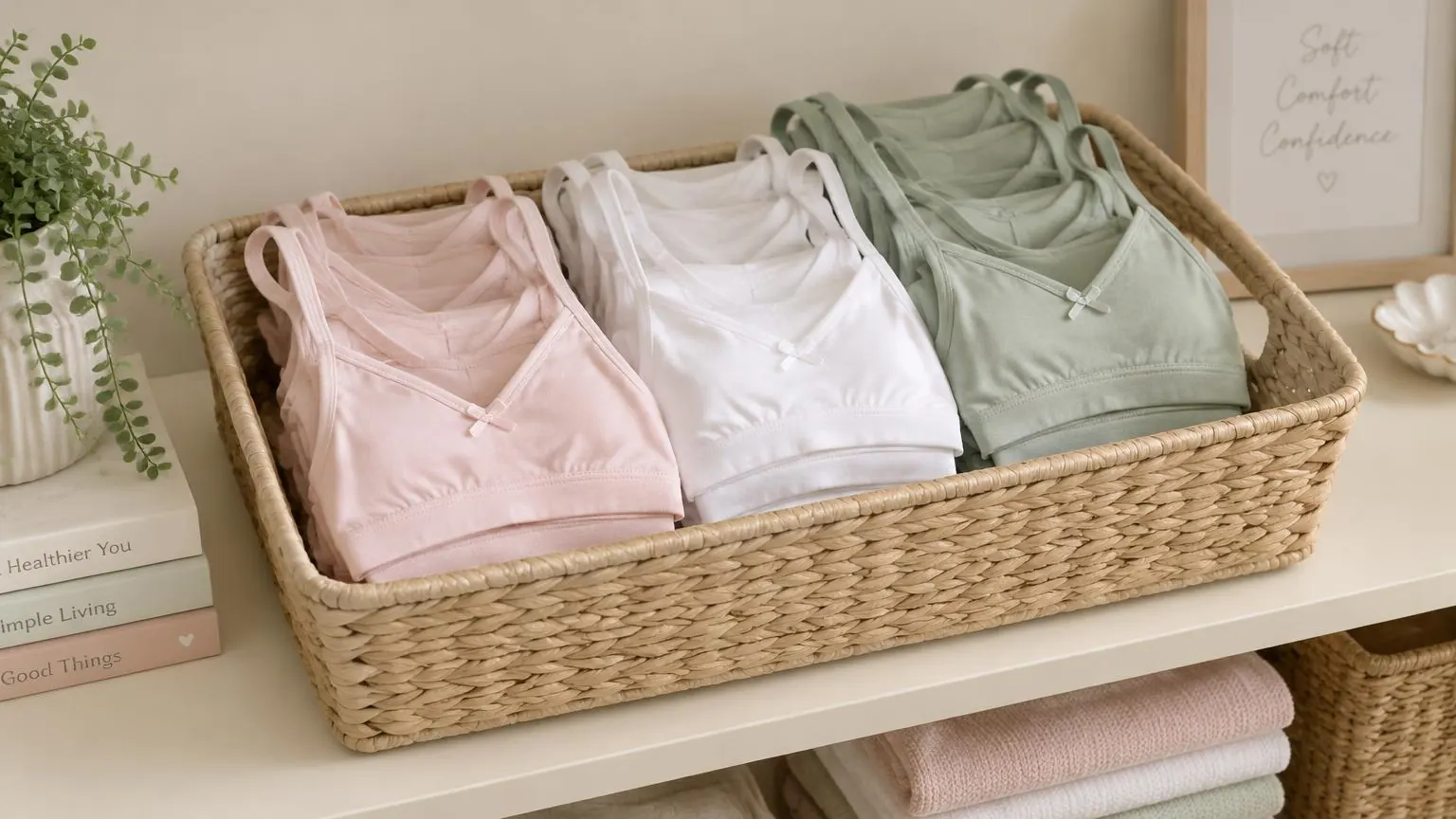
Three simple options to try
Start with whichever option sounds useful to you. Product names vary, so check the garment itself.
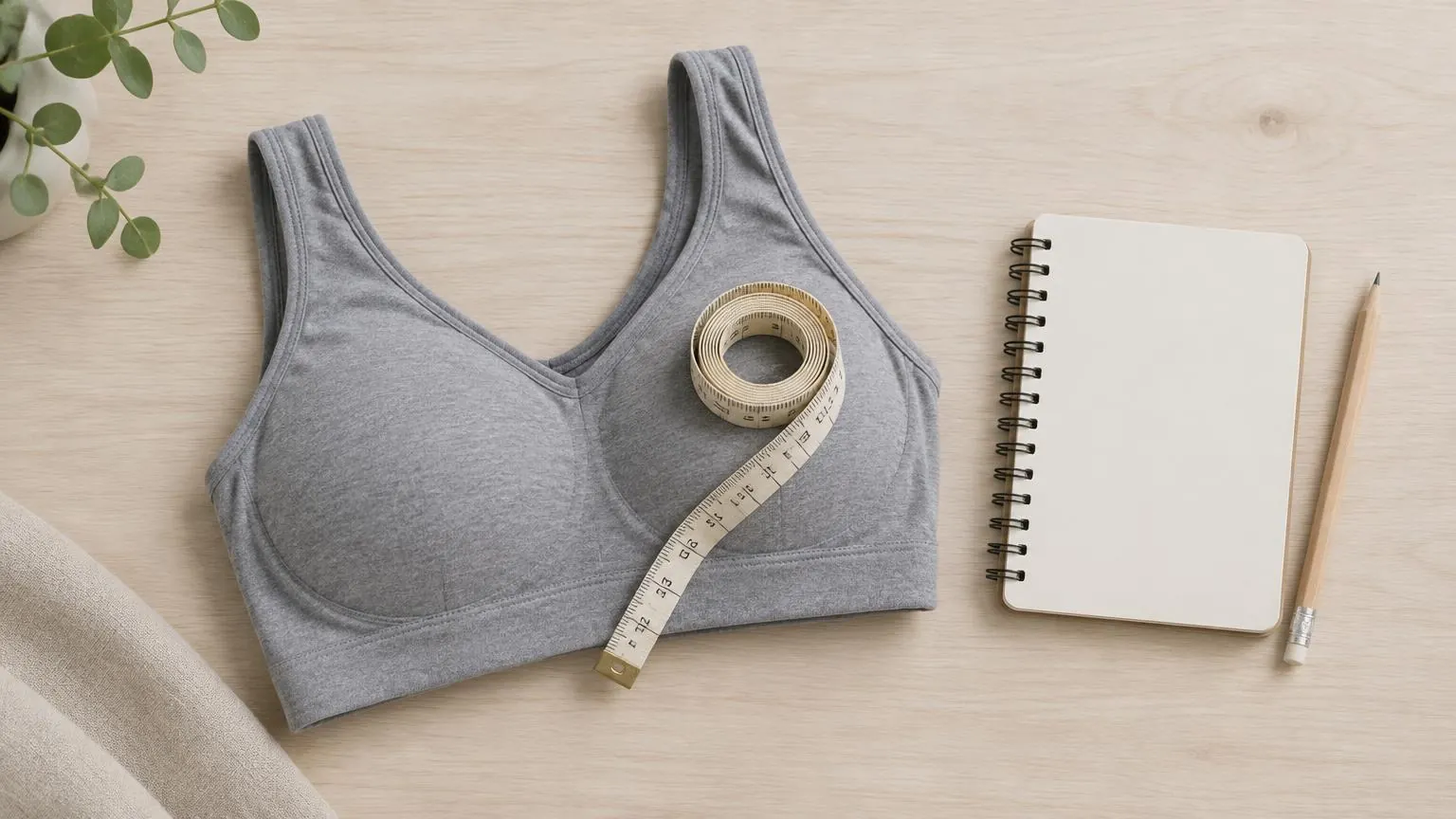
Crop top or training-style top: a short, usually pull-on top with a stretchy front panel rather than separate structured cups. Consider it if you want a simple extra layer. During a try-on, check whether you can pull it on and off comfortably and whether the lower edge stays in place.
Soft-cup bra: a bra with fabric cups; for a simple starting option, you might compare non-wired versions. Consider it if you prefer separate cups and adjustable straps or hooks. Check the cup edges as well as the band: neither gaps nor overflow should be ignored.
Sports bra: a style designed to increase comfort while minimising breast movement during activity (Breast Cancer Now). Our sports-bra guide explains what to check for PE or another activity. Move in it before deciding, and check that it is comfortable to take off.
You do not need one of each. Start with what you want to try now.
Check the fit without chasing a perfect label
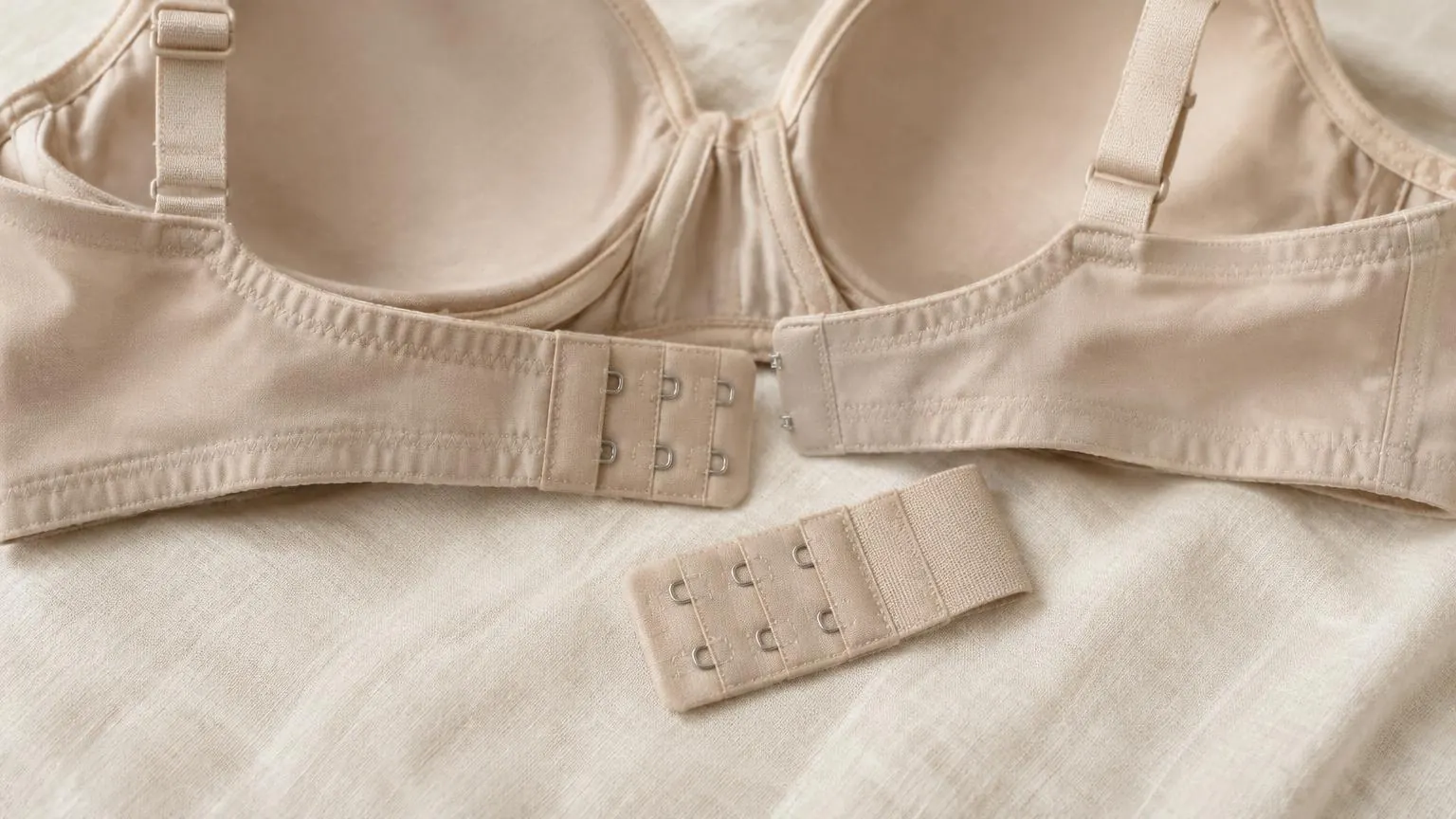
Breast Cancer Now's fitting guide recommends a level band, cups that contain the breasts without loose fabric or bulging, and straps that sit closely without digging in. In a wired bra, the wires should follow the breast contour without digging in or gaping (Breast Cancer Now).
For a first try-on:
- Put it on and adjust any straps.
- Sit down, reach up and move your arms.
- Notice whether any edge rubs, presses or shifts.
- Try another garment if you find yourself tolerating discomfort.
For a pull-on crop top without separate cups, focus on whether the front panel contains you comfortably and the lower band stays in place. Do not apply a wired-bra centre-front check to a soft stretch top.
If you would like help, ask the trusted adult you are with. You can also ask for privacy and explain which parts of the fitting you want to handle yourself.
Understanding the label
In UK bra sizing, the number refers to the band and the letter to the cup relative to that band. Cup letters are not a measure of how developed you are.
Check band fit, cup volume and cup shape separately. If the band seems comfortable but the cup edges do not fit, another cup shape may be worth trying before changing the band fit.
Some crop tops use clothing sizes instead. Follow that garment's size guide, then check the fit. Measured bra sizes are only a guide because fit varies between brands and styles (Breast Cancer Now). Cup letters after D differ across UK, US and European systems; our international sizing guide explains the distinction.
You can revisit the choice as you grow
Breasts can keep changing into the late teens, so a garment that fitted before may stop feeling right. Wearing a bra does not affect breast growth (Nemours KidsHealth).
Recheck the fit if you notice new tightness, loose fabric, digging or slipping. There is no need to keep wearing an uncomfortable bra to ‘get used to it’.
Once you know which basic style you prefer, our teen comfort and fabric guide can help you compare everyday features without turning the choice into a list of things you must own.
Sources and further reading
External pages referenced in this guide. Brand fitting guides describe that brand's own sizing; check each brand's chart.
- Breasts and Bras (Nemours KidsHealth) (kidshealth.org)
- Can Bras Affect Breast Growth? (Nemours KidsHealth) (kidshealth.org)
- Your guide to a well-fitting bra (Breast Cancer Now, PDF) (breastcancernow.org)
Report an outdated detail or broken link
Found something out of date, or a source link that no longer works? Let us know. We read every report and fix errors as described in our corrections policy.
Keep reading